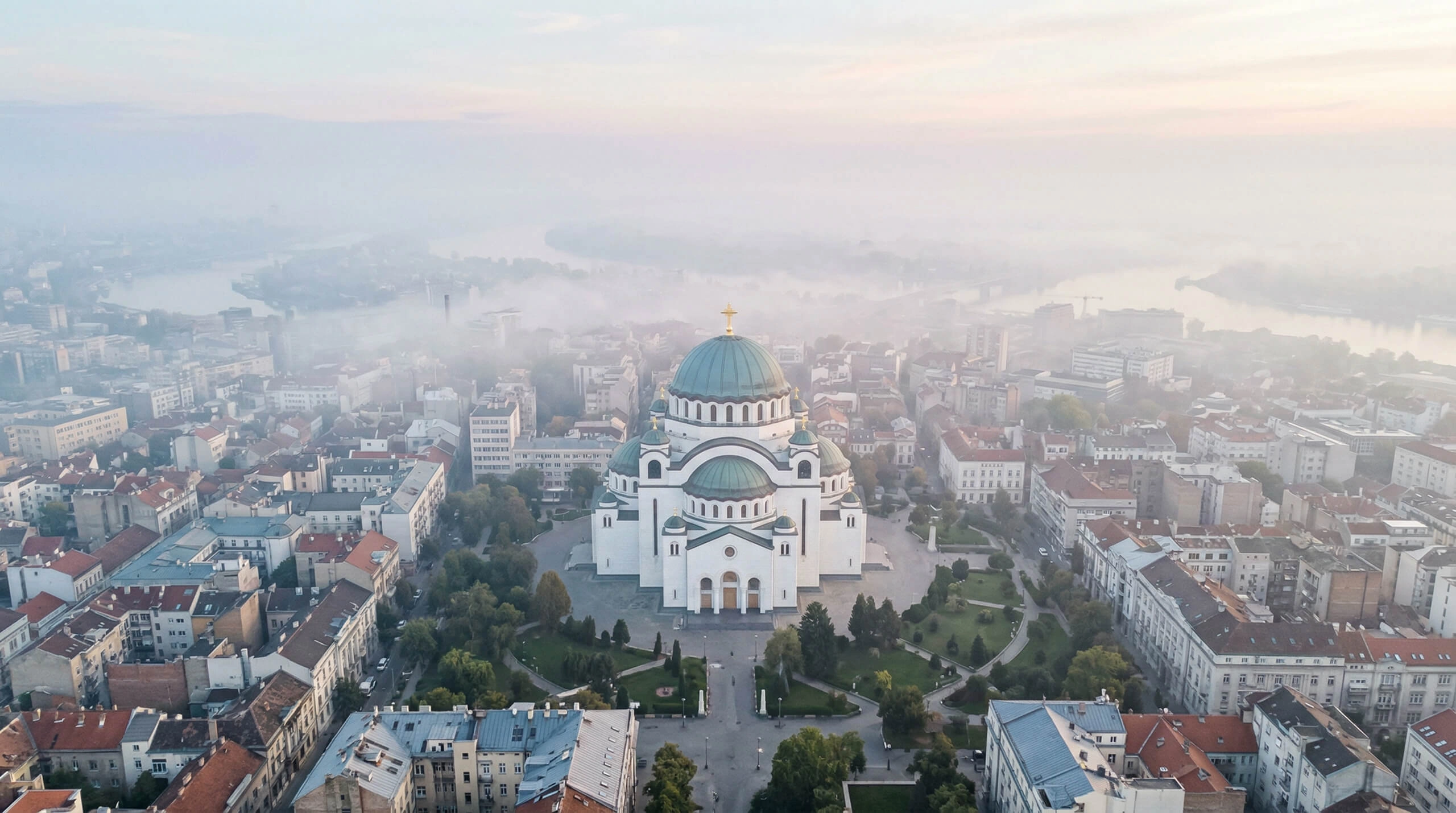
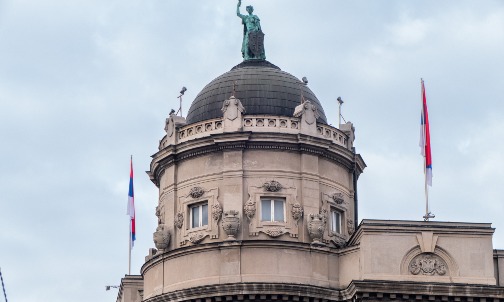
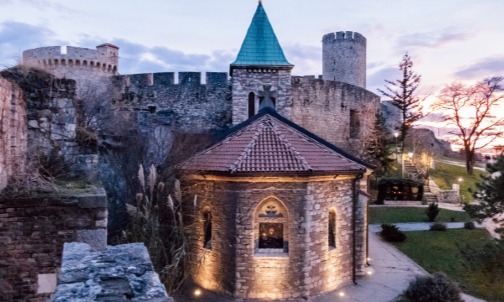
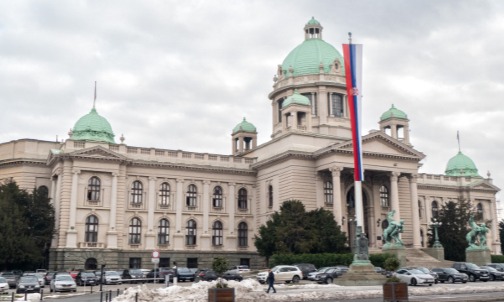
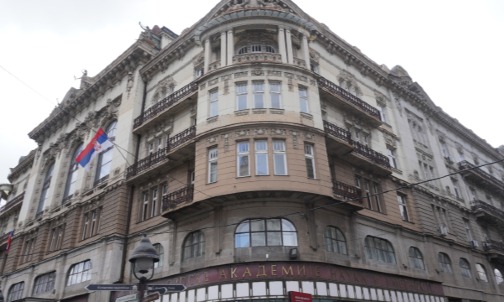
Belgrade does not like being photographed. It does not like to pose. It is always in motion. It does not come out well in photographs, and it always seems as if the picture had been taken somewhere else. It is not Paris, flirting with artists. Not London, admiring itself in photographs. Not Rome, teeming from head to toe with souvenirs. Not Vienna, convenient to engrave on an ashtray. Not Moscow, showing itself off inside a glass snow globe. Not Berlin — a little bear on a keychain. Not Budapest, which, when photographed, luxuriates on colourful plates beneath warm fish paprikash. It is not Istanbul with golden teeth. Nor Athens, a press for handwritten pages... There remains in it the little that I had never seen anywhere else before. Perhaps only three things: its rivers, its sky, and its people. From these three old elements, the unique and unrepeatable soul of Belgrade is born.
(M. Kapor)
"I imagine Belgrade in the early 1930s: noise, dust, the smell of lime and cement. The city, tearing through its Balkan earthen skin, was growing, climbing upward with the bricks of its buildings. For architects, this was a place of extraordinary freedom: King Alexander had conceived the idea of creating a new country — Yugoslavia — and this new country needed a new capital. Not merely a city, but an architectural anthology of national myths. For Russian émigré architects, this was a place of extraordinary freedom: create, invent, embody dreams, do whatever you wish — even weave Byzantine lace into Constructivism — everything would find its place here."
(I. Antanasijević)
After the Revolution of 1917 and the Civil War, tens of thousands of Russian émigrés found themselves outside Russia. Belgrade became one of the principal centres of this emigration: several tens of thousands of people from the former Russian Empire arrived in the Kingdom of Serbs, Croats and Slovenes. Here they established their own communities, opened schools, taught, organised scholarly societies and artistic associations, and actively participated in the cultural and public life of the country. Russian architects and engineers played a particularly important role in this process. King Alexander I Karađorđević was favourably disposed toward Russian specialists and involved them in the development of the new capital, which was being actively built and modernised during the interwar period. As a result, many Russian architects were able to continue their profession in exile and left a visible mark on the appearance of Belgrade.
"Belgrade is one of the oldest cities in the world, and one more often subjected to destruction than most. Whoever has come to know and love this city today knows and loves it not at all for what can be seen in it or touched by hand. Of the greater and perhaps most beautiful part of Belgrade, not a trace remains; we shall never again be able to look at it, photograph it, or touch it. But history also belongs to another, vanished part — the part that cannot be reconstructed, the part preserved not in the world around us, but in our soul."
(M. Pavić)
As Milorad Pavić wrote in A Biography of Belgrade, history also belongs to another, vanished part — the part that cannot be reconstructed. The part preserved not in the material world around us, but in the human soul.
The Russian architects of interwar Belgrade were not merely creators of buildings. In a certain sense, they became architects of human souls — those who, through forms, lines, and spaces, sought to preserve a lost home, to transfer the memory of it into a new city, and to inscribe their own identity into an environment that was foreign, yet welcoming.
The project Russian Belgrade was born under the Belgrade sun — on the margins of the Balkan Dialogue 2024, organised with the support of the Gorchakov Fund. It emerged in conversations and walks, in accidental routes and long gazes at a city that knows how to remain silent and speak at the same time. It is an attempt to hear Belgrade as it once was — and as it continues to live within us. The project arose as an attempt to approach the immaterial charm of the city, which eludes direct observation.
"We no longer have a common ground with the past. We can recover it only through reconstruction — by means of documents, archives, monuments."
(P. Nora)
Drawing on the methods of digital humanities, we work carefully with what has disappeared or stands on the verge of oblivion. We seek to reconstruct not only the buildings and names of Russian architects, but also to reflect on the images, meanings, intonations, and accents — everything that continues to live in Belgrade's collective memory.
We advocate the preservation and critical reflection of Russian heritage in Belgrade — a conversation about Russian emigration not as a set of static figures from history textbooks, but as a living cultural experience deeply woven into the fabric of the city. For us, history and heritage are inseparably connected with the fragile and careful reproduction of identity, formed at the intersection of memory, place, and personal experience.
The project is conceived as an open and constantly developing platform. We will regularly supplement it with new routes through the city, stories of architects, buildings, and places connected with Russian emigration. In time, we hope to turn Russian Belgrade into a large and multilayered story of the city's Russian heritage — accessible not only to researchers, but also to any curious reader who wishes to encounter the magic of Belgrade.