Academic
Belgrade’s cultural life is full of remarkable names. On this route, we invite you to explore the key gathering places of the Serbian intelligentsia built by Russian architects.
6 Points
1 h 4 min
5.9 km
Audio guide
The Serbian writer Milorad Pavić, in his story "The Biography of Belgrade," writes the following:
"Belgrade was and remains a major center of artistic and cultural life. For many artists, their path to the world began here, which later helped them return home."
And indeed: the cultural life of Belgrade is full of bright names. In this route, we propose to explore the key gathering places of the Serbian intelligentsia, built by Russian architects.
We will start with its forge – the building of the Serbian Academy of Sciences and Arts. About it, by the way, Pavić also writes, and it would be a mistake not to quote him: "The famous Serbian comediographer Jovan Sterija Popović founded the Serbian Academy of Sciences and Arts in 1841, which changed its name several times in the following centuries. Its members included Tolstoy and Solzhenitsyn, Sienkiewicz, Jean Cassou, Sholokhov, and many others."
Stop 1. SASA (SANU)
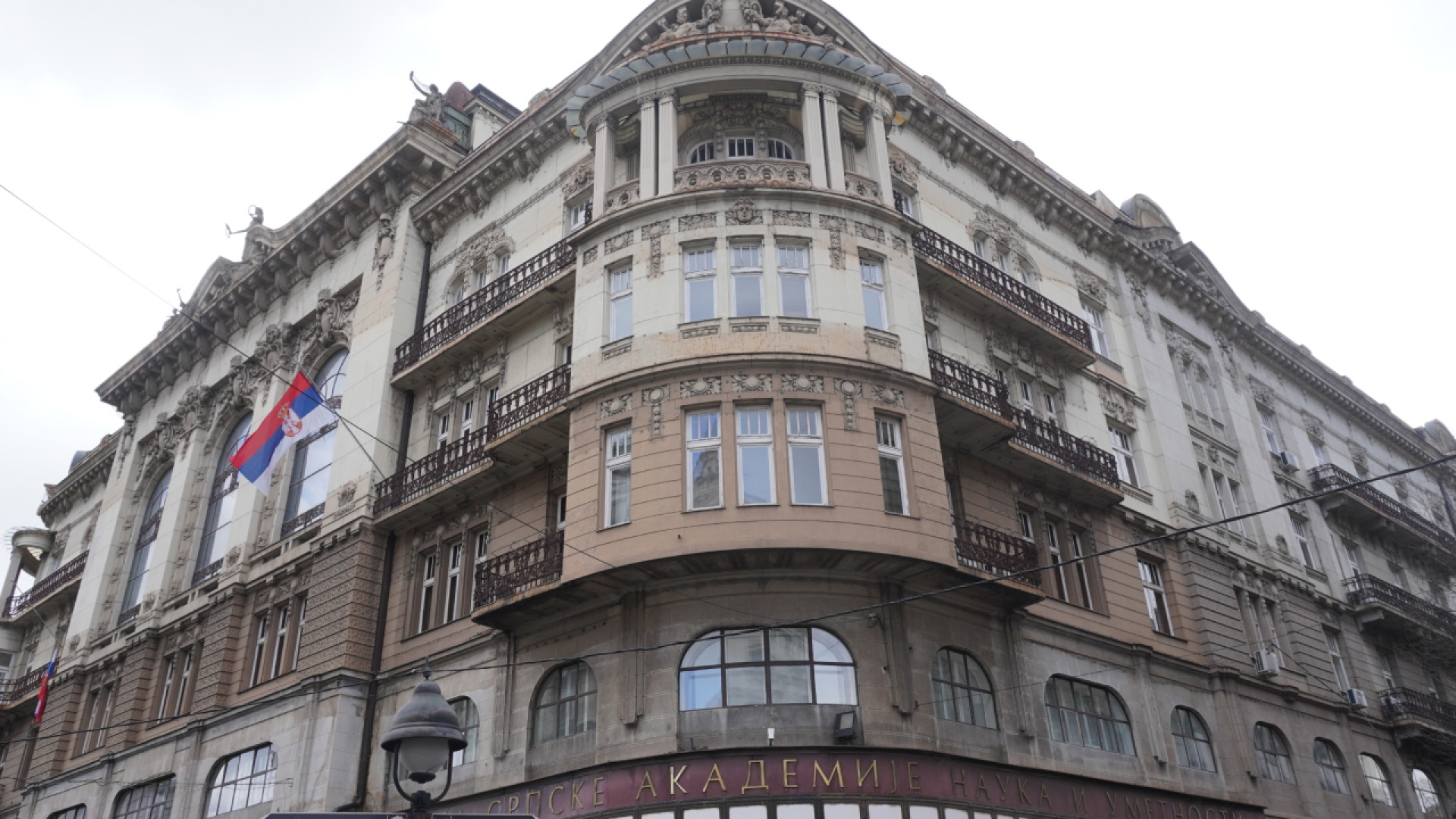
Stop at the Academy building and look up. On Knez Mihailova Street, this is especially important. At eye level, there are bright shop windows, tourists, street vendors, the noise of the city. But shift your focus to the second and third floors – and the architecture begins to speak to you differently: more calmly, more convincingly, as if the very history of Belgrade is emerging from the bustle onto the surface.
Before you - is the building of the Serbian Academy of Sciences and Arts, embedded right into the city's main pedestrian artery. Here, the Academy is part of the city scene, its showcase. The building's style can be broken down into two layers: academism sets the strict syntax – symmetry, clear composition, confident proportion; Art Nouveau adds accents – softness of plasticity, decorative freedom, a lively gesture. The result is a rare balance: the building simultaneously demonstrates status and leaves a feeling of creativity, intellectual prestige, and non-triviality.
Inside are a library, archive, gallery, and lecture hall. After World War II, the interiors were redesigned, but the façade retained its role as an anchor. Thus, the idea of memory renewal was at play: the external representation of cultural artifacts is stable, but the content changes, or rather, adapts to the rhythm of time. This work was carried out by an émigré architect, our compatriot Georgy Samoilov.
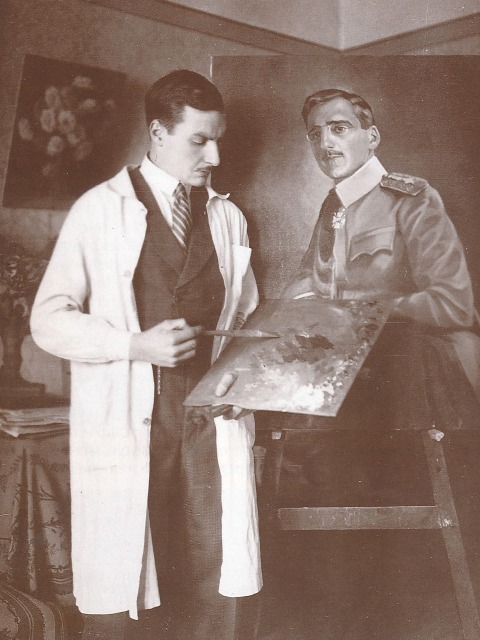
Samoilov is a figure to whom our route will return again and again. His biography and post-war legacy in Belgrade have become the subject of museum-archival work and exhibition projects. It is worth emphasizing that he belonged to the younger generation of Russian émigrés who had already formed within the Yugoslav environment, and that his work included academism, modernism, and interior design.
An important detail: when we talk about Russians in Belgrade – it's not only about "longing for home" and the phenomenon of the temporary resident with "suitcases at the station," waiting for a chance to leave. Many Russian émigrés integrated into the environment, striving to become part of the local reality: some designed buildings, some opened schools, some taught law, some staged performances, some simply tried to build a new life – and did so with true professionalism.
Among the Russian architects intricately woven into the eclectic fabric of interwar Belgrade was Pyotr Dmitrievich Anagnosti. His family history was connected to Serbia from the very beginning: his father, who served in the Odessa municipal administration, organized accommodations for Serbian soldiers in 1914, established a hospital for them, and donated funds to support boarding schools.
In 1919, Anagnosti emigrated with his family via Constantinople to Belgrade, where he graduated from the Russian-Serbian Gymnasium and then the Architectural Department of the Belgrade University Faculty of Technology. Even during his student years, he showed exceptional aptitude for descriptive geometry – his works were exhibited.
Anagnosti's professional path developed in collaboration with the greatest architects of the era: he worked in the atelier of Bogdan Nestorović, then with Aleksandar Deroko, participated in designing the dormitory of the Orthodox Theological Faculty, worked on projects for the Faculty of Law, the Faculty of Veterinary Medicine, and the Kolarac National University together with Petar Bajalović. The author of more than twenty residential and public buildings in Belgrade and other cities of Yugoslavia, he designed apartment buildings, banks, administrative structures; his projects received awards, and some were implemented after the war. Having survived captivity in World War II, Anagnosti nevertheless returned to Belgrade and became a professor, dean of the Faculty of Architecture, and author of numerous textbooks. His work combined academism, the Serbian-Byzantine tradition, and modernism – a stylistic eclecticism that naturally aligned with the architectural destiny of 20th-century Belgrade. Anagnosti is one of the key figures for our route – as he had a hand in most of the points we will examine. And indeed, we are now approaching one of them.
Stop 2. Kolarac
In Serbian, the Ilija Kolarac Cultural Center sounds like "Zadužbina Ilije Kolarac" – and for good reason. The word "zadužbina" in Serbian culture signifies not so much charity as a kind of contract with the future: an investment in what does not yet exist but should come into being. Ilija Milosavljević Kolarac left a foundation for education and culture – and the city received an institution that does not conserve knowledge but constantly produces it in a public form.
Years later, Aleida Assmann in her book "The Long Shadow of the Past: Memorial Culture and Historical Politics" would write: "Conservation and storage serve as a necessary prerequisite for cultural memory; however, it is only the individual perception, evaluation, and appropriation of preserved materials, as occurs through the media, cultural and educational institutions, that turns it into cultural memory." It turns out that the Serbian patron anticipated history.
As you walk here, let us recall: Russian refugees arrived in Yugoslavia in waves; sources give different estimates of the scale, and in Belgrade itself, the count ran into the thousands. Associations emerged – professional and cultural: unions of engineers, educators, doctors, and artists. That is, emigration quickly turned into a network of connections, and this network needed venues – and one such venue is right here.
The Kolarac National University building was constructed in 1929–1932 according to a design by Petar Bajalović. The architecture is calm academism: symmetry, clear composition, a façade as a worthy shell for culture. But the main thing here is not the façade, but the sound. The Great Hall was conceived as an instrument, and this is felt even when you simply stand nearby: the place seems destined for the city to pause for a moment... and become an attentive listener.
"But where are the Russian architects?" the attentive listener will ask. And they would be right to question. The construction of the Kolarac National University involved the already familiar Pyotr Anagnosti and Andrei Papkov, whom we invite you to get to know. If only for the reason that the following verses were written about him:
I want to be daring, I want to be worldly,
I want to be on familiar terms with maidens!
I want to be a Turkish pasha,
And build arches and bridges!
I am doing a good deed,
I built everything, I am the smartest of all
In the 20th century – Michelangelo
Perhaps only Andrey Papkov.
There are not many like me now,
My ancestor Lenka was da-Vinci.
I am immeasurably more talented than all,
And therefore my life is not foul.
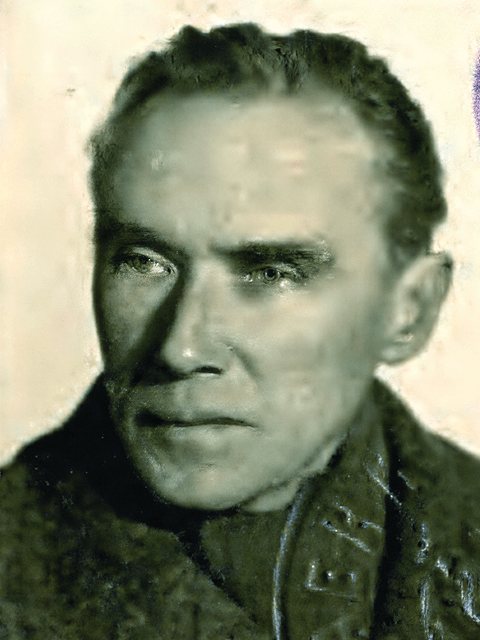
Andrey Vladimirovich Papkov was born in 1890 in the Kursk village of Glubokoye. He managed to receive a technical education in St. Petersburg and studied at the Academy of Arts. But the revolution cut short the straightforward path of his biography, and Papkov, like thousands of others, found himself in exile. Together with his family, he arrived in the Kingdom of Serbs, Croats, and Slovenes and started anew – as a student at the Architectural Department of the University of Belgrade.
In Belgrade, he quickly became a prominent figure. His student projects – an exhibition pavilion in the Serbian-Byzantine spirit, a casino, a grandiose theater conceived "in the best spirit of the Paris Garnier Opera" – aroused interest and debate. He received the title of engineer-architect, taught ornamental drawing, participated in the design of the Church of Saint Sava, where his talent as a watercolorist proved invaluable in creating the artistic part of the project. He was called a "descendant of Leonardo da Vinci" – for his versatility, for the rare combination of engineering rigor and pictorial temperament.
In 1932, Papkov opened his own atelier, and interwar Belgrade became his workshop. He designed dozens of residential buildings – harmonious, proportional, adorned with neoclassical decor, but always with a slight modernist twist. The house for Milutin Mešarović, the building for Plavšić, the Janković mansion, apartment buildings on quiet streets – all this formed a recognizable style. The culmination was the "Balkan" Hotel (1938–1939): a massive façade in the spirit of Russian academic architecture, as if asserting the dignity and scale of émigré talent in the city center. He participated in the competition for the Kolarac National University, received awards – eighteen prizes for various projects – but did not always get the right to build his designs. In this lay both his fame and the hidden bitterness of his fate.
The war interrupted the construction rhythm: instead of new façades, there was clearing of ruins and restoration of damaged buildings. After 1945, hopes for broad professional realization in the new Yugoslavia did not materialize. He still built a villa in Dedinje – austere, with a hint of socialist realism – but felt that the era had changed and the language he mastered perfectly was no longer in demand. In 1951, Papkov left for Argentina. In Buenos Aires, he worked in a ministry, designed for private companies, participated in the construction of the Russian Orthodox Church Abroad's cathedral on Núñez Street – as if closing the circle of an exiled fate.
He died in Argentina around 1975, having lived a life divided among three worlds – pre-revolutionary Russia, interwar Belgrade, and Latin American emigration. But if you walk through the streets of old Belgrade and raise your eyes to the austere, balanced façades of the 1930s, you can see the mark of his hand – an architect who managed to turn exile into a form of creativity.
Let's return to Kolarac. The first major concert took place on February 4, 1932 – even before the official opening. Kolarac first began to resonate with sound – and only then became a cultural institution. Over the decades, thousands of concerts have been held here; among the performers were Sergei Prokofiev and Sviatoslav Richter. The Russian musical tradition integrates into Belgrade's daily life naturally, as part of the European canon. For example, here is what researcher of Russian emigration V. Kosik writes: "One can name another famous singer – baritone Nikolai Mikhailovich Ammosov (Amosov). He sang four times during the day at the Kolarac cinema before screenings, and in the evenings at the 'Russian Family'."
Kolarac is not only a concert hall; it is also lectures, a gallery, educational programs. In short, those fashionable "third places" – neither home nor work, but a place where you feel comfortable due to shared values and cultural code. Cultural code, the opportunity to share it with a community of like-minded people – this is the leitmotif of our route today. And it seems these values were important both then and now.
Now let us move from the National University to the university in the original sense of the word, the center of intellectual life – the University of Belgrade. And we will start with the Faculty of Law.
Stop 3. Faculty of Law
As the history of Serbia shows, the Faculty of Law at the University of Belgrade is a true launching pad for preparing talented politicians: among its graduates are the current President of Serbia, Aleksandar Vučić, writer and politician Vuk Drašković, former President of Serbia Vojislav Koštunica, Slobodan Milošević, writer Branislav Nušić – in short, a real forge of political and intellectual elites.
The Faculty of Law building on Boulevard of King Alexander was built in 1936–1940 with the participation of Pyotr Anagnosti, whom we mentioned earlier. This is modernism without a manifesto: functional, restrained, almost without ornament. The floor plan is rounded-triangular; the architecture emphasizes the corner and makes the entrance a scene. It engages with the city in the way law engages with life: establishes boundaries, sets frameworks, turns chaos into form.
If viewed from above, the building somewhat resembles an open book – no doubt, a legal code. Touching upon student life, we can also turn to their daily living conditions.
Stop 4. King Alexander I Student Home
The building was constructed in 1927–1928 according to a design by Russian architect Georgy Pavlovich Kovalevsky. Georgy Kovalevsky was a Russian architect and urban planner whose professional biography was initially linked to the theory and practice of city planning. After the revolution, Kovalevsky continued his career in the Kingdom of Yugoslavia: he worked in the Ministry of Construction, developed the general plan for Belgrade, and received a Grand Prix at the 1925 Paris Exhibition for his capital development project. According to his designs, the King Alexander I student dormitory (in collaboration with V. V. Lukomsky), the covered market in Kragujevac, the architectural treatment of the Kalemegdan Fortress terrace were built, and development plans for several Yugoslav cities and parks, including Topčider Park, were implemented.
The King Alexander I Student Home stands freely, with a monumental, complex base, and does not look like a temporary dormitory but like a serious city institution. This is important: the state of the late 1920s was forming the "student home" as an institution of care for the first time. Because the student here is nothing other than an investment in the happy future of the new state.
We have looked at the house of law and the house of students – and now we turn east, towards the house of exact sciences.
Stop 5. Faculty of Technology and Faculty of Mechanical Engineering
Finally, we move to the technical building and the Faculty of Mechanical Engineering. The building of the Technical Faculties on Boulevard of King Alexander was built in 1926–1931 with the active participation of Grigory Samoilov. It is monumental and structured like a city within a city: a branched base, inner courtyards, a powerful central accent, a grand staircase. The plasticity and sculpture emphasize the status of engineering knowledge as a "temple of progress," but behind this pathos lies a very practical reality: interwar Belgrade was modernizing, building, and laying infrastructure. In this modernization, Russian specialists participated as carriers of exclusive knowledge, which they shared with great respect with the locals: through teaching, engineering schools, professional associations.
The last stop on our route, farthest from the center, is the Faculty of Veterinary Medicine at the University of Belgrade.
Stop 6. Faculty of Veterinary Medicine
The Faculty was founded in 1936. Construction of the building began before World War II, was interrupted, and completed in 1948 with the participation of Pyotr Anagnosti. This is architecture of disrupted time: a trace of war, a trace of pause, a trace of reconstruction. The complex was designed by Jovanka Bončić-Katerinić – one of the first Serbian female architects.
Finale
Bringing our narrative full circle, we can once again turn to the story with which we began this walk – Pavić's "Biography of Belgrade." He writes: "Immediately after the revolution that took place in Russia, the Kingdom of Yugoslavia received an avalanche of Russian emigrants, among whom were university professors who resumed their activity here. One of them, a renowned specialist in the history and theory of Russian verse, Kirill Taranovsky, taught me Russian phonetics at the university. But the most noticeable trace left in the city was left by Russian architects."
Russian emigrants integrated into the fabric of Belgrade life – into the university, into artistic circles, into publishing houses, into architectural bureaus. They brought with them academic training, the St. Petersburg school of drawing, experience in imperial urban planning – and at the same time found themselves involved in the search for a new Yugoslav, Serbian-Byzantine style.
However, this process was not one-sided. If Russians influenced the Serbian cultural environment, then Serbia itself – its historical memory, medieval architecture, Orthodox tradition, epic poetry – inspired the Russians. It is no coincidence that in the 19th century, the Serbian theme resonated in Pushkin's work; it is no coincidence that in the interwar period, Russian architects turned with such attention to the Morava school, to domed compositions, to medieval motifs.
Belgrade of the 1920s and 1930s became a space of synergy: where modernism coexists with Byzantine reminiscences; where émigré professors shaped a new generation of Yugoslav intellectuals. Integration into architecture – literally, into stone and façade – was accompanied by organic integration into intellectual life. And, perhaps, it is precisely this striving for dialogue, for joint creation, and for mutual inspiration that unites both sides – transforming nostalgia for the homeland into a source of cultural growth.
Route points
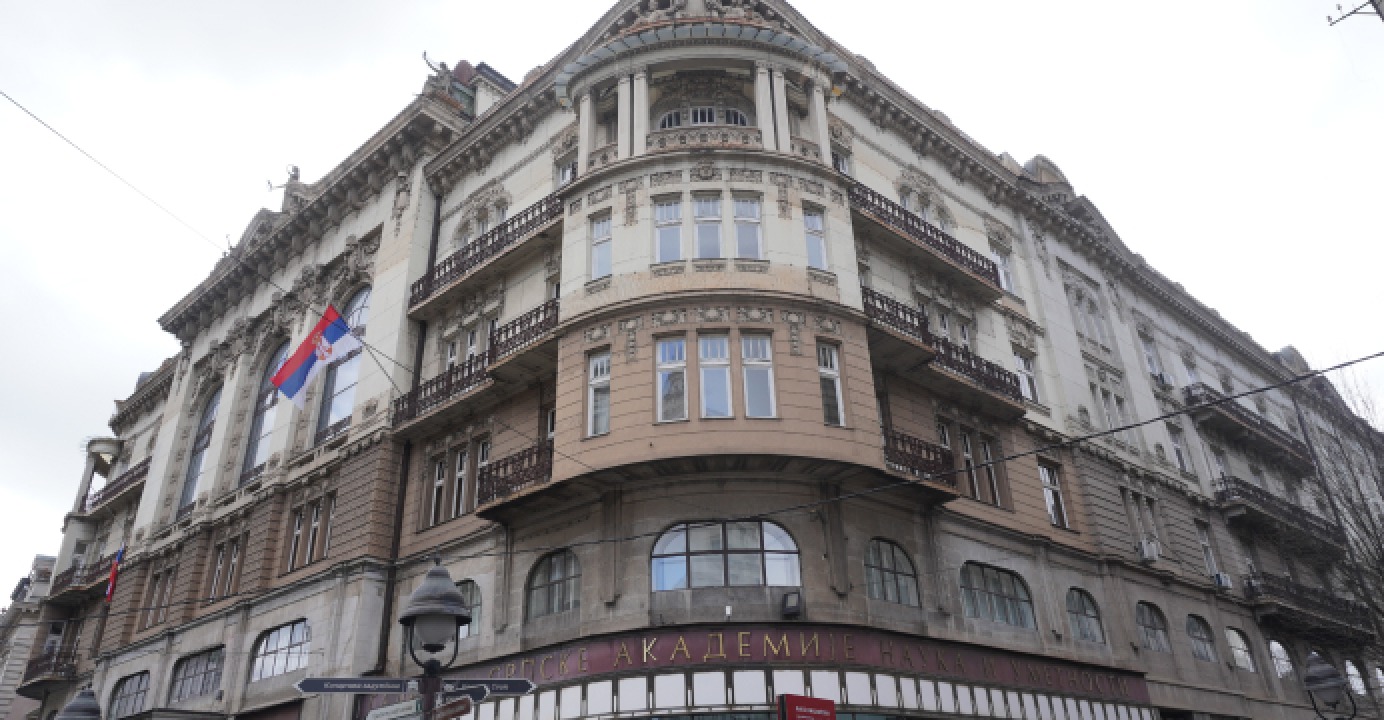
The Serbian Academy of Sciences and Arts
The Serbian Academy of Sciences and Arts on Knez Mihailova Street is a harmonious combination of academic rigour and creative Art Nouveau, remaining a cultural and intellectual anchor in the heart of Belgrade.
Start
ул. Кнеза Михаила, 35, Белград
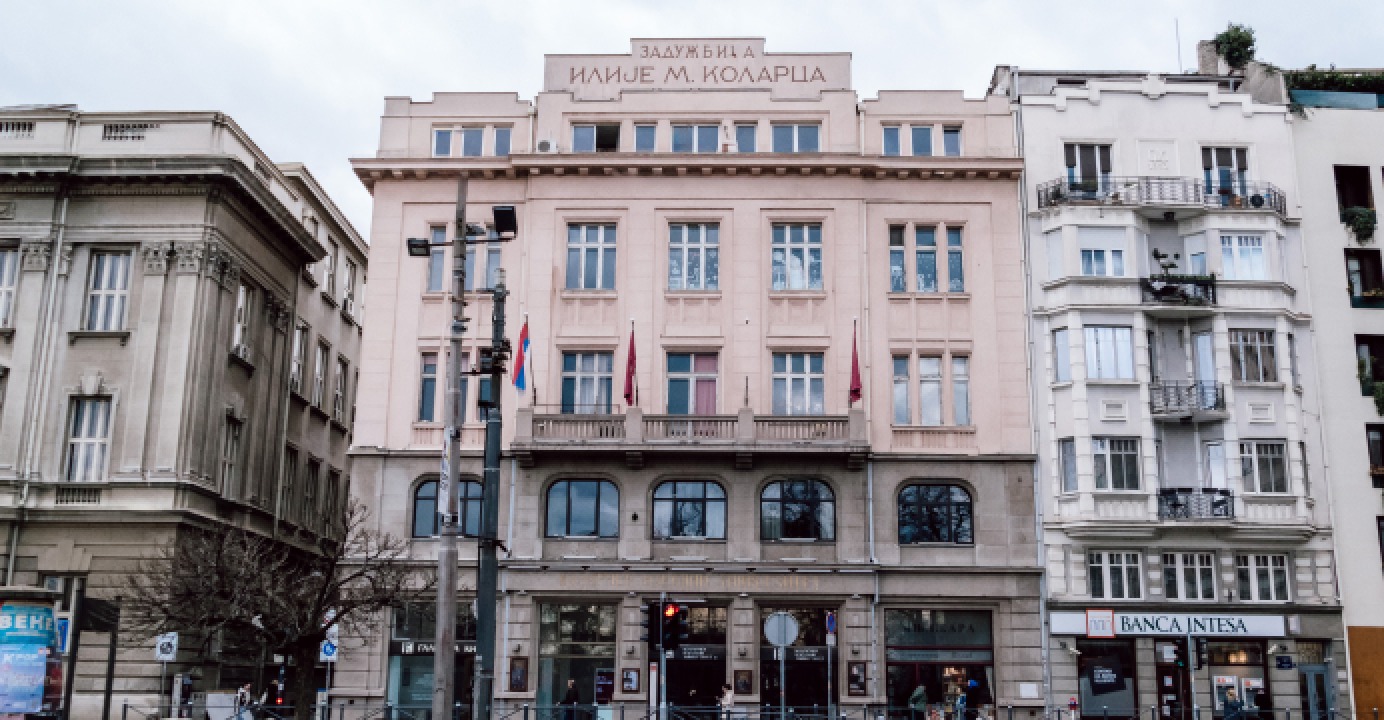
Kolarac
A symbol of the Enlightenment tradition and of a social contract with the future, bringing together academic architecture, the unique acoustics of its concert hall, and an active urban cultural life.
0.22 km
2 min
Студентски трг, 5, Белград
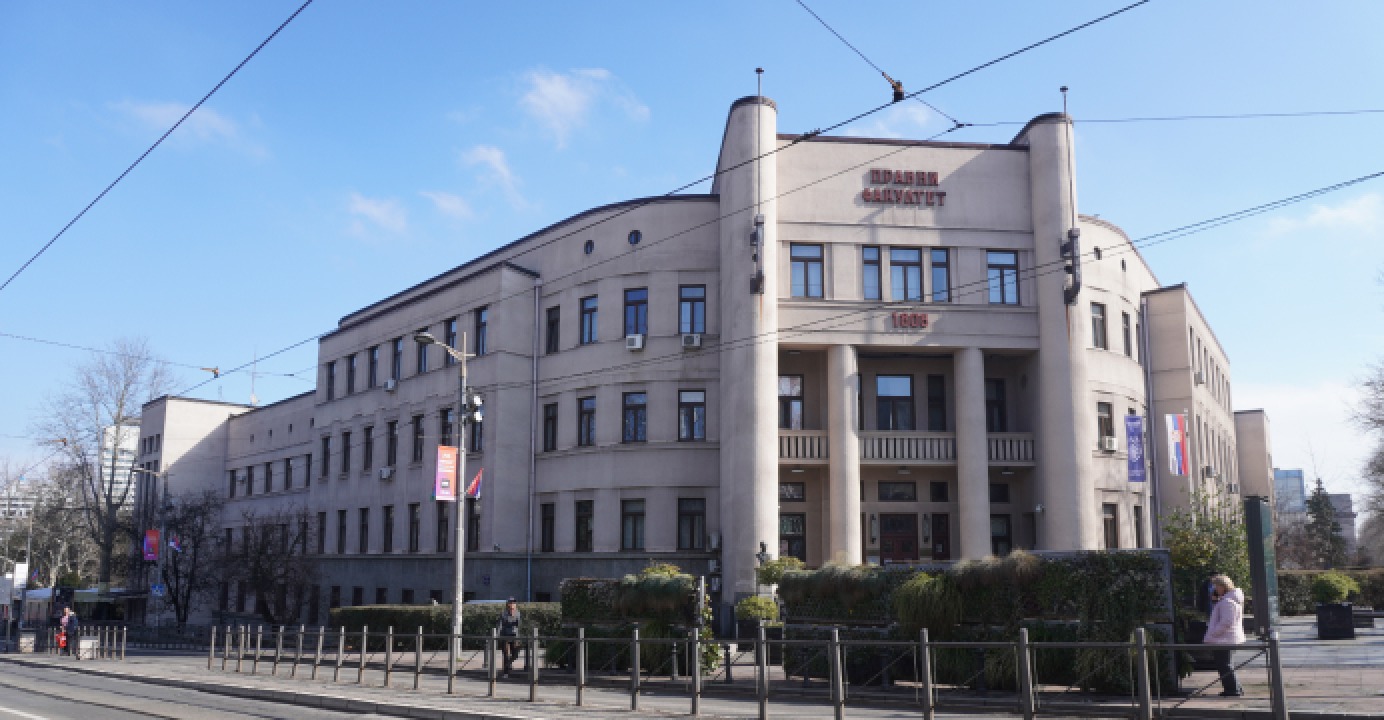
The Faculty of Law
A rigorous modernist complex, reminiscent of an open book, serving as a space for the formation of Serbia’s political and intellectual elite.
2 km
22 min
бул. Короля Александра, 67, Белград
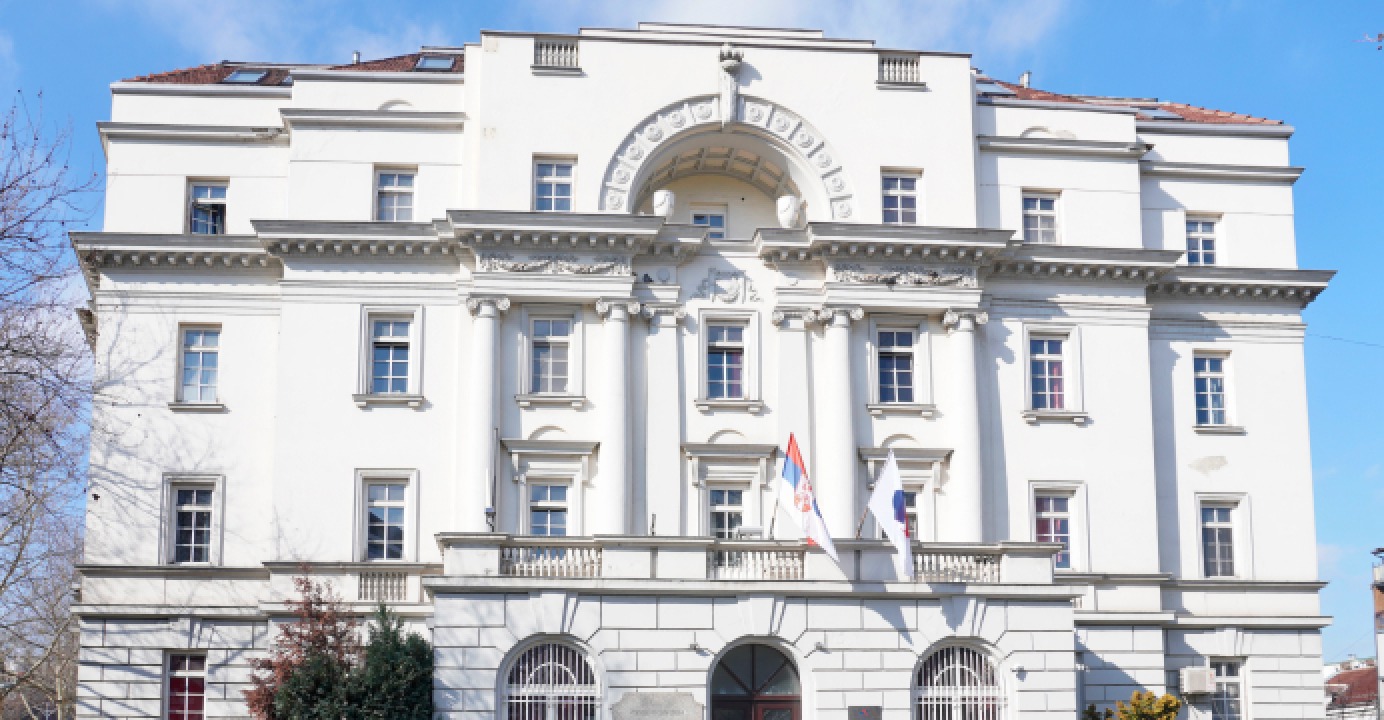
King Alexander I Student Residence
The King Alexander I Student Residence, built according to the design of Georgy Kovalevsky, embodies the state’s concern for the future, with its monumental architecture and its status as an important educational institution in Belgrade.
0.8 km
9 min
бул. Короля Александра, 75, Белград
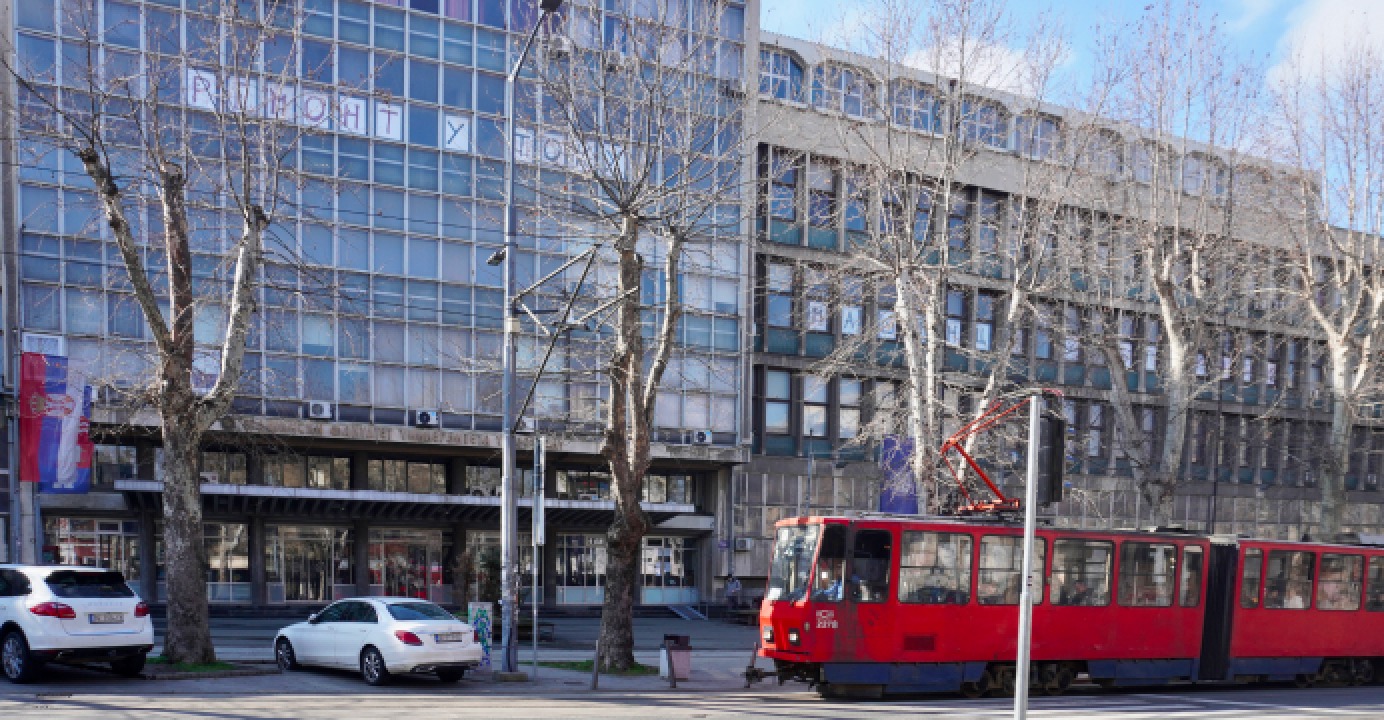
The Technical and Mechanical Engineering Faculties
A monumental complex with inner courtyards and expressive sculptural articulation, embodying the idea of engineering knowledge as a “temple of progress” and symbolizing the contribution of Russian specialists to the modernization of Belgrade.
0.6 km
5 min
ул. Королевы Марии, 16, Белград
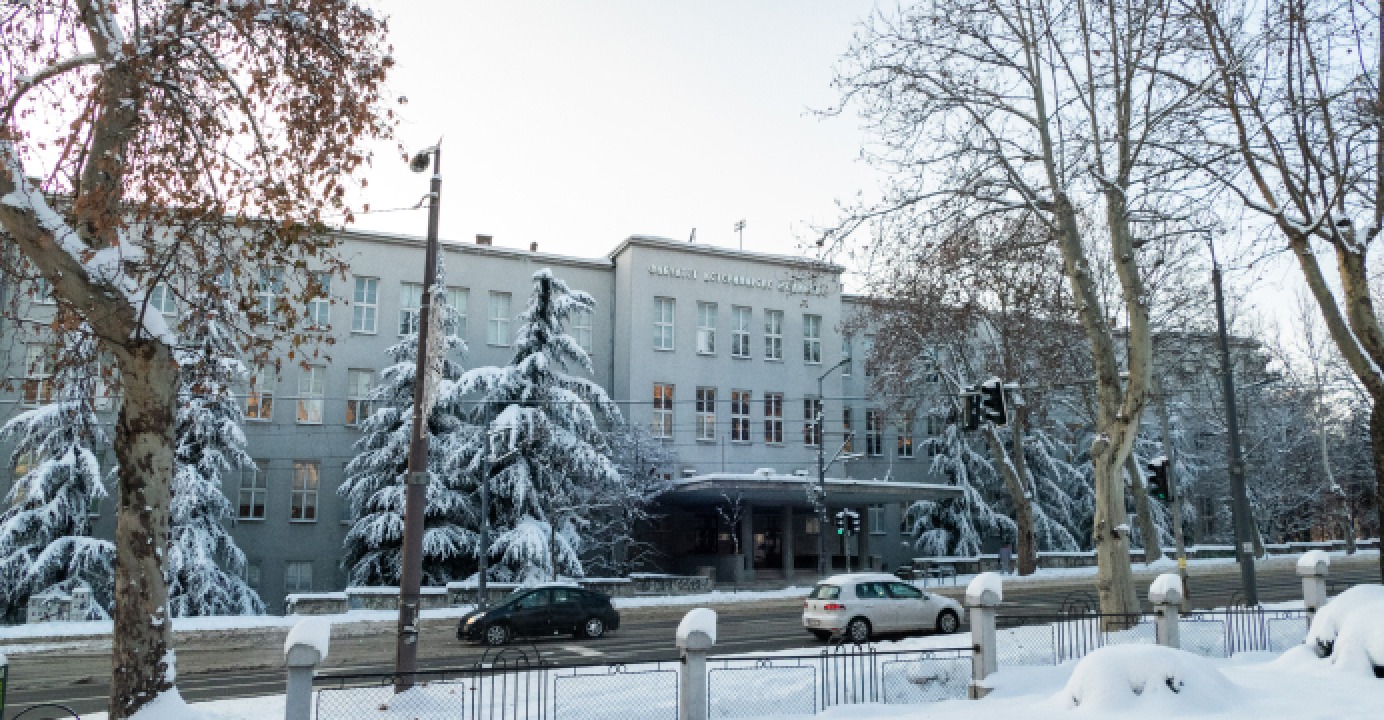
The Faculty of Veterinary Medicine
The building embodies the drama of construction interrupted by time — from its pre-war conception to its post-war completion — and marks the contribution of one of the first Serbian women architects, Jovanka Bončić-Katerinić.
2.28 km
26 min
бул. Ослободженя, 18, Белград
Architects
Those who shaped the look of the route's points,
learn their biographies and contribution to the face of the city.