Vasily (Wilhelm) Fyodorovich von Baumgarten
A Russian officer and engineer who became one of the key architects of interwar Belgrade
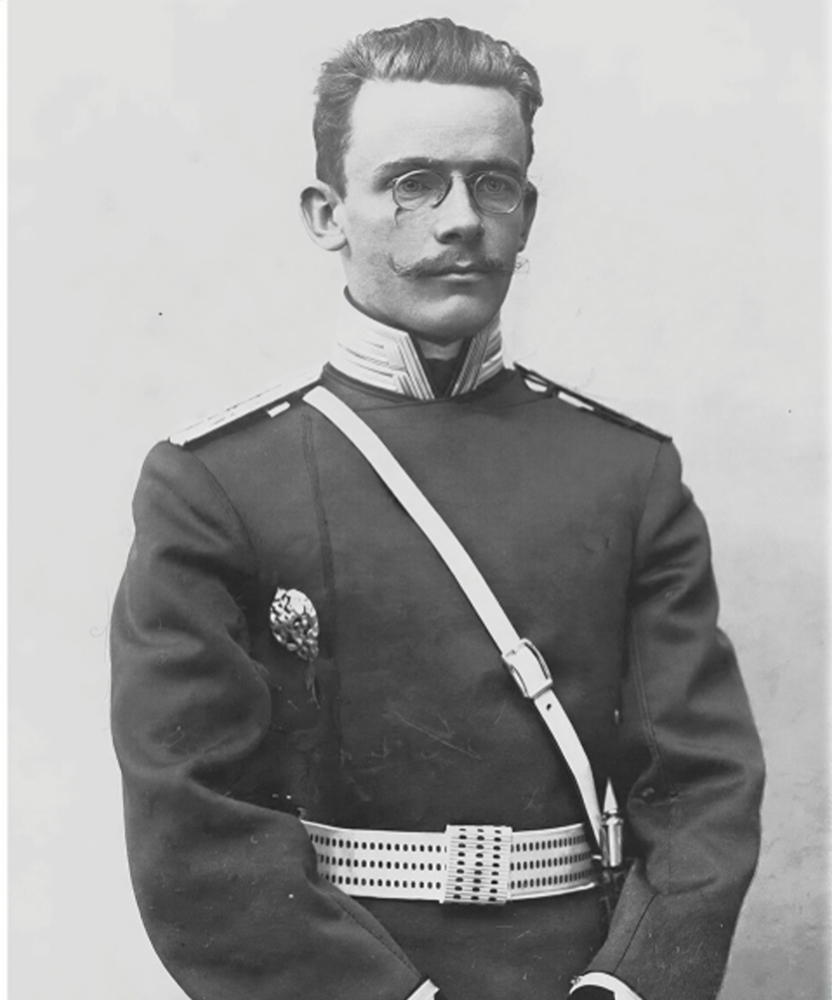
Vasily Fyodorovich Baumgarten was born in St. Petersburg into an Orthodox noble family of Baltic origin. He graduated from the Nikolaev Military Engineering Academy (1905), where he later taught (just four years after graduating!). Already in the pre-revolutionary period, he combined engineering service with teaching, worked for the St. Petersburg City Administration, took part in major construction projects, and taught the art of building.
During the Russo-Japanese War he served in Vladivostok, and during the First World War he rose to the rank of colonel. After the Revolution he joined the White movement, and in 1920 he was evacuated from Sevastopol. In 1921 he emigrated with his family to the Kingdom of Serbs, Croats, and Slovenes, where he continued his military and engineering career, attaining the rank of major general in the Yugoslav army.
In emigration, Baumgarten became one of the key figures in the Russian artistic and engineering milieu of Belgrade. He headed associations of Russian military engineers, actively participated in exhibitions, belonged to the Russian artistic group K.R.U.G., and played a notable role in consolidating the émigré community. Baumgarten worked freely within the Russian academic tradition, in Neo-Renaissance forms, in the spirit of Empire style, Art Deco, and monumentalized Art Nouveau.
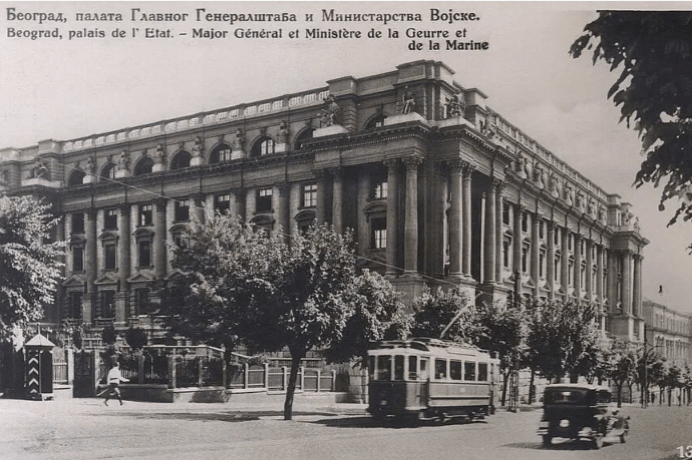
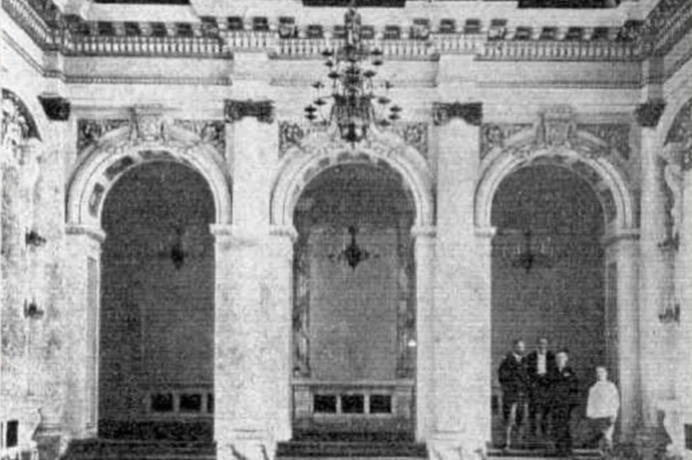
Baumgarten’s architectural work in Yugoslavia began in 1923, when he entered service in the Engineering and Technical Department of the Ministry of the Army and Navy. During this period he created two landmark works of interwar architecture—the General Staff Building in Belgrade (1924–1928) and the Officers’ House in Skopje (1925–1929; unfortunately destroyed in the 1964 earthquake). The General Staff Building in Belgrade became a vivid example of Russian academic classicism in the Yugoslav setting: its monumental composition with a colossal order, sculptural décor, and pronounced representational character conveyed the idea of state power. The interiors were designed in the spirit of Russian Empire style, with allegorical sculptural programs (the very composition “Samson and the Lion” by V. Zagorodnyuk is enough to make the point!).
“a majestic and monumental edifice, broad in sweep, grand in composition, and perfect in its proportions and details”
One cannot fail to mention the “monument of memory”—the cultural sanctuary of the Russian émigré community in Belgrade—the Russian House. The idea of creating a center for Russian cultural institutions was supported by King Alexander; the blessing of the construction took place in 1931, and the ceremonial opening followed in 1933. A Charter was laid into the foundation of the House, and the quotations from it are impossible to omit in our brief note:
“To provide these values with a worthy repository,
to call their life-giving forces to new life,
to give the spirit of the Russian person the opportunity to devote itself
to the scholarly and artistic pursuits so dear to him, and, finally,
to temper Russian youth born abroad in the finest traditions of the glorious Motherland,
this House has been created”
Baumgarten was not only an architect but also an active participant in the Russian socio-political movement in exile. The press of the time quoted his speeches, in which he sharply criticized communist rule and called on people to support the “Fund for the Salvation of the Motherland.”
Baumgarten himself emphasized that the studios of the Russian House, “while separately serving the work of various public organizations of Russian painters, musicians, actors, and writers, in their common harmonious whole should foster the union of servants of Russian and Yugoslav art, which would lead all of us together along the path toward the undoubtedly forthcoming splendid flourishing of Slavic art and culture in the bright future of a United Great Slavdom”
After 1945 his fate remained unknown for a long time. It later became clear that he had emigrated to Argentina, where he died in 1962.
Baumgarten’s buildings and projects in Belgrade:
The Main General Staff Building of the Army and Navy of Yugoslavia in Belgrade (1924–1928)
The House of Mita Lukić in Voždovac (1931)
The Russian House of Emperor Nicholas II (1933)
The building of the Main General Staff of the Army and Navy of Yugoslavia in Belgrade (today)
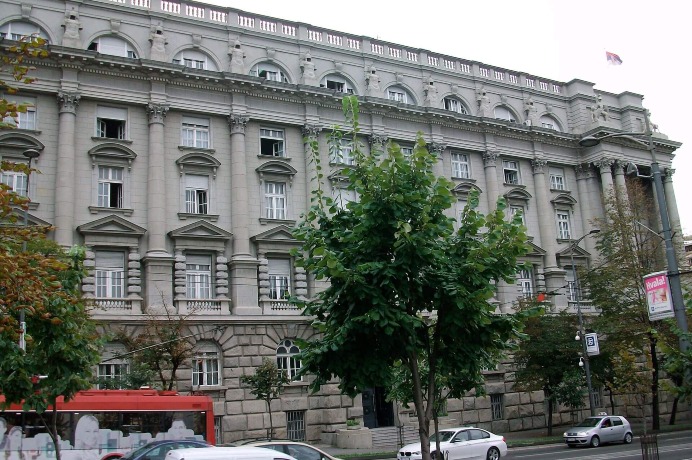
The building of the Main General Staff of the Army and Navy of Yugoslavia in Belgrade (1935 photograph).
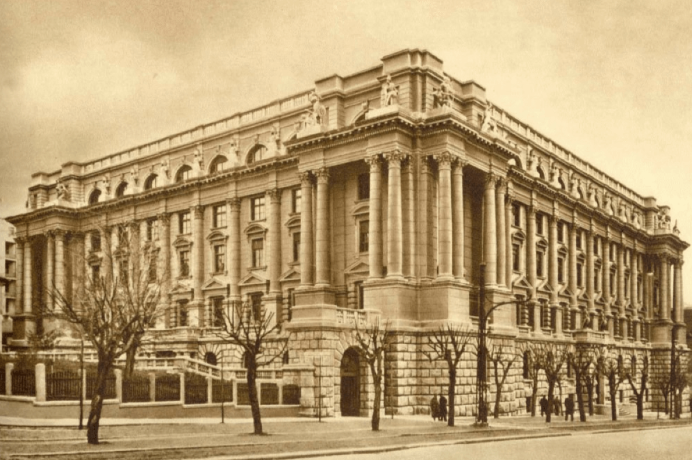
The building of the Main General Staff of the Army and Navy of Yugoslavia in Belgrade (photograph from the 1930s–1940s)
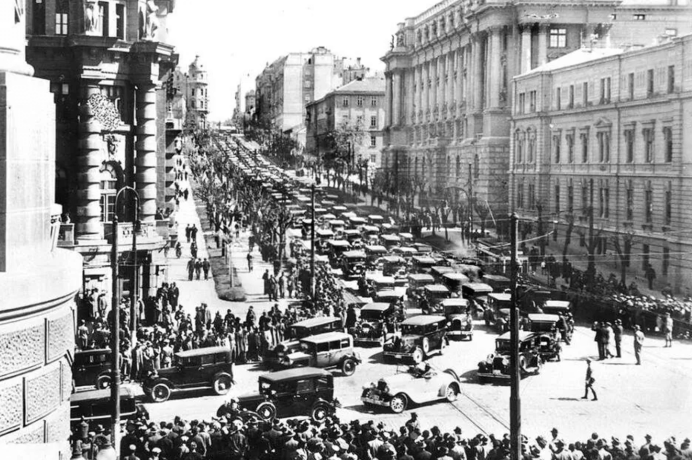
The General Staff Building
The General Staff Building (interior)
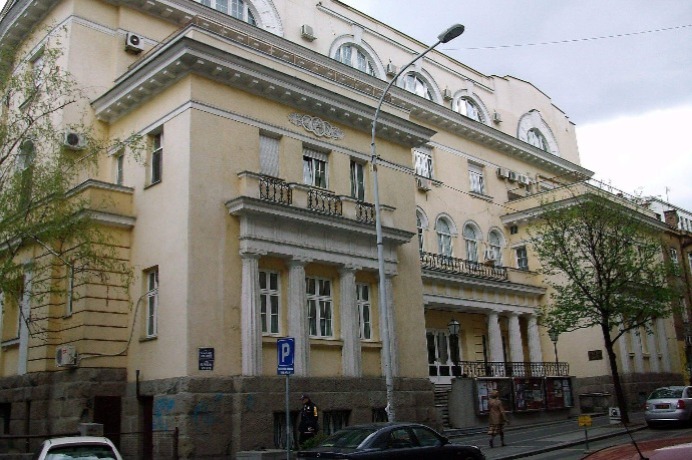
The Russian House named after Emperor Nicholas II (1931)
Points
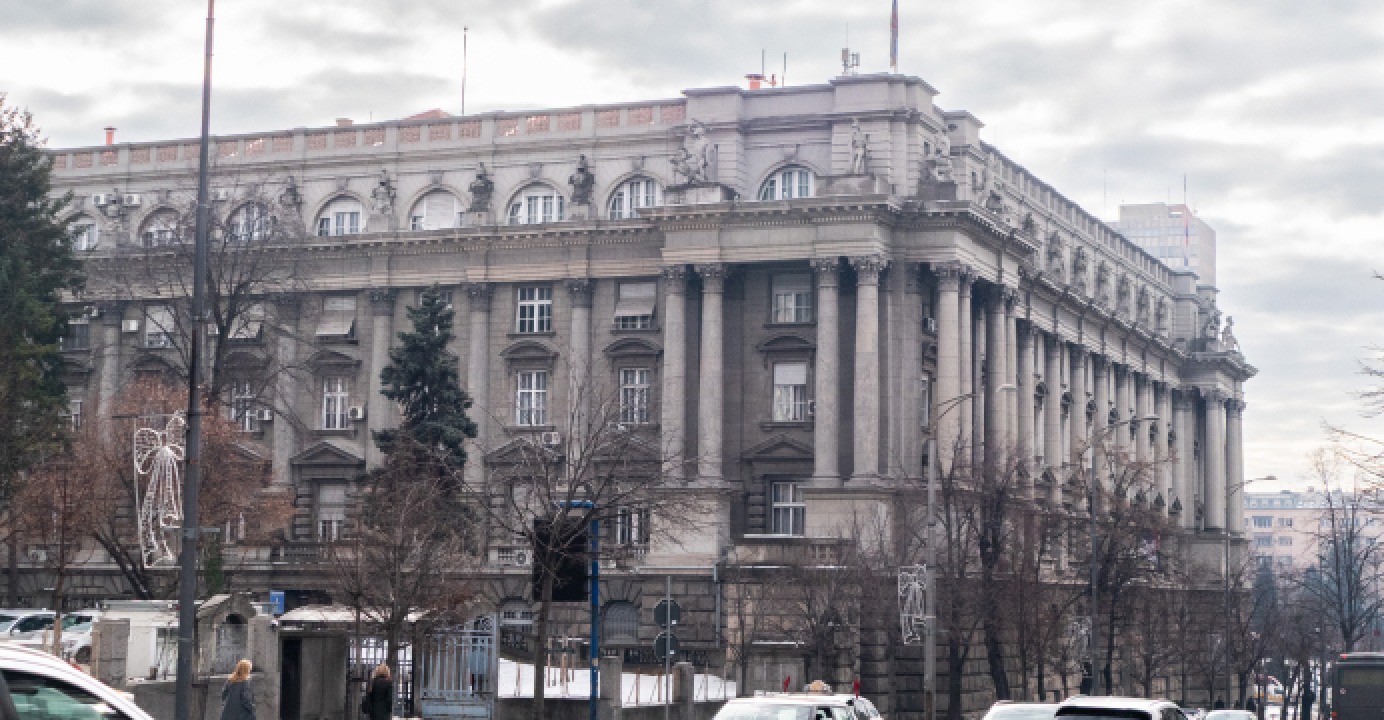
The “Stone Palace,” Baumgarten’s Old General Staff Building
Before you stands the building of the old General Staff, also known as the “Stone Palace” or “Baumgarten Palace.” It was built between 1924 and 1928 according to the design of the émigré architect Vasily Wilhelm Fyodorovich Baumgarten.
ул. Кнеза Милоша, 33, Белград
Date of Birth
17 October 1879
Date of Death
13 May 1962
About
The hospitable host of the Russian House