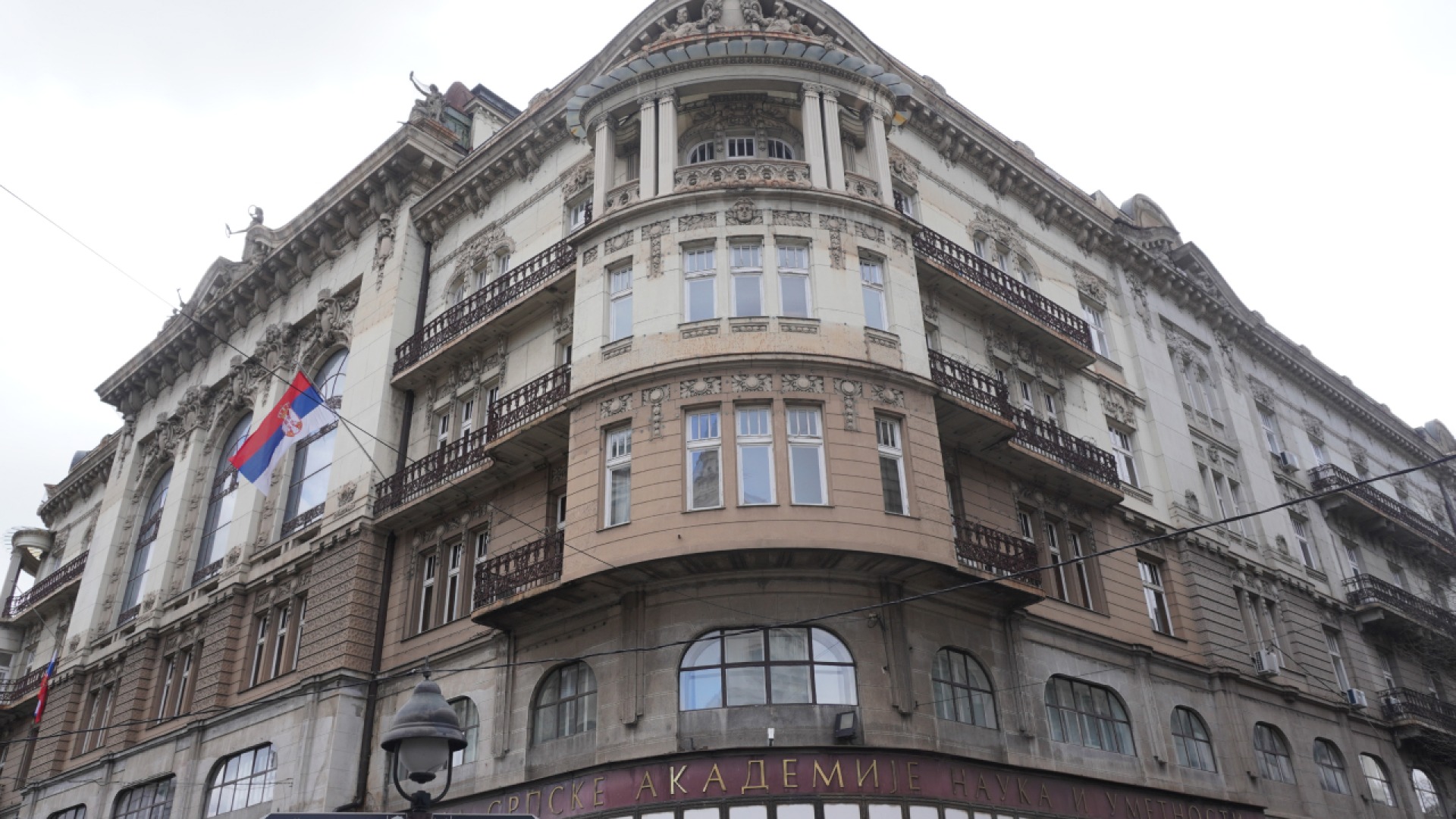
The Serbian Academy of Sciences and Arts
The Serbian Academy of Sciences and Arts on Knez Mihailova Street is a harmonious combination of academic rigour and creative Art Nouveau, remaining a cultural and intellectual anchor in the heart of Belgrade.
ул. Кнеза Михаила, 35, Белград
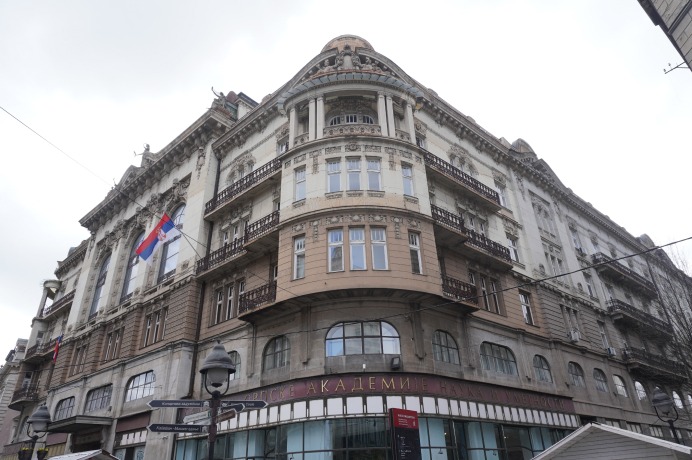
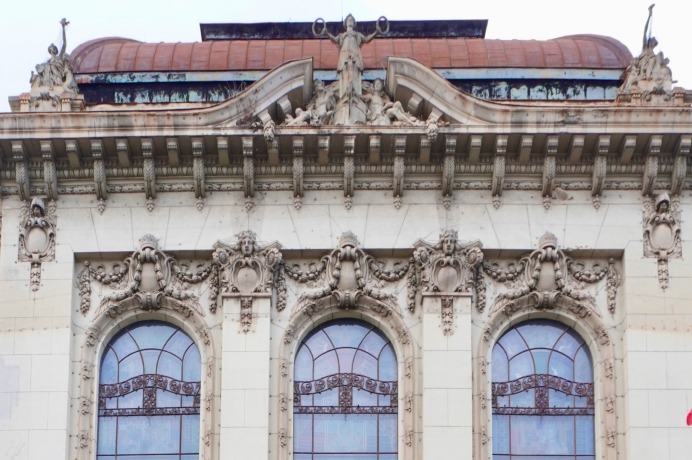
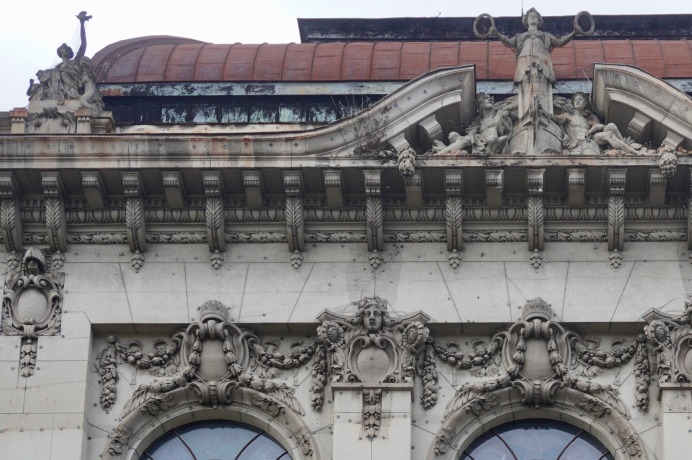
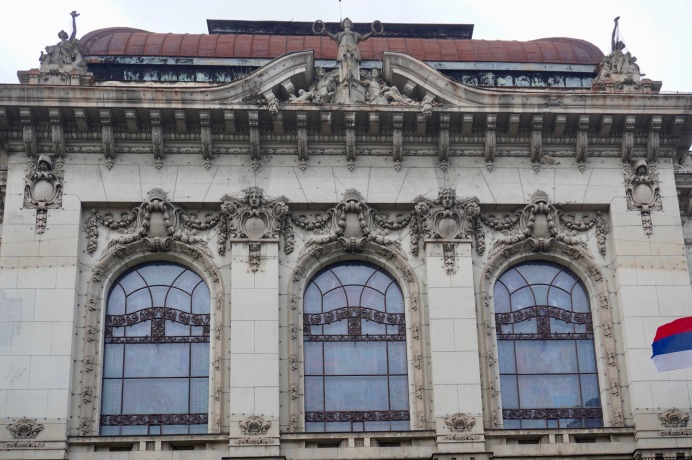
Stop by the Academy building and lift your gaze upward. On Knez Mihailova, this is especially important. At eye level, there are bright shop windows, tourists, street vendors, and the noise of the city. But once you shift your focus to the second and third floors, the architecture begins to speak to you differently: more calmly, more persuasively, as if Belgrade’s own history were emerging from the bustle onto the surface.
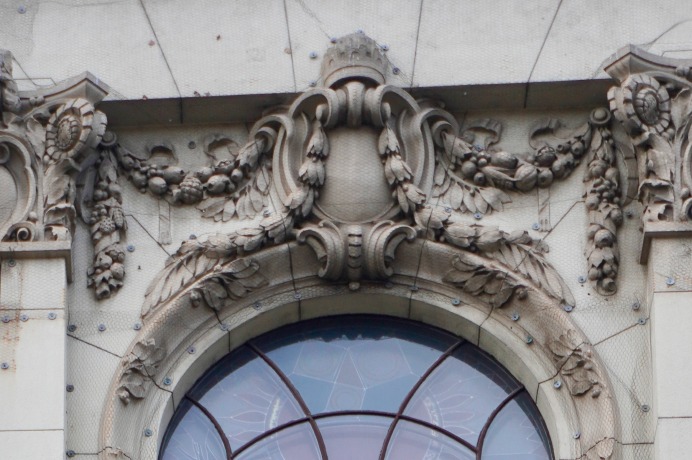
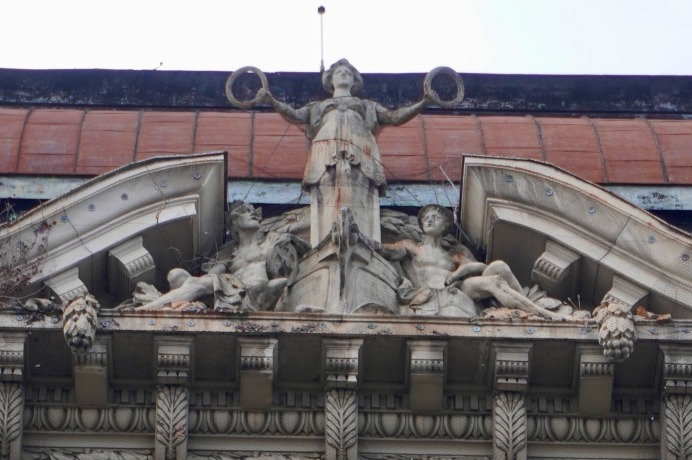
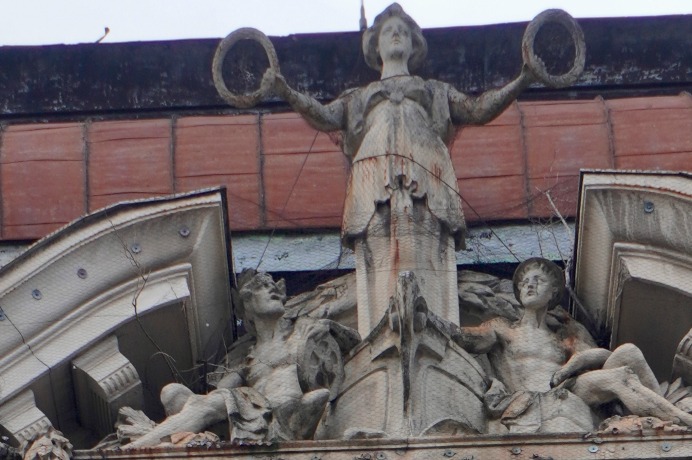
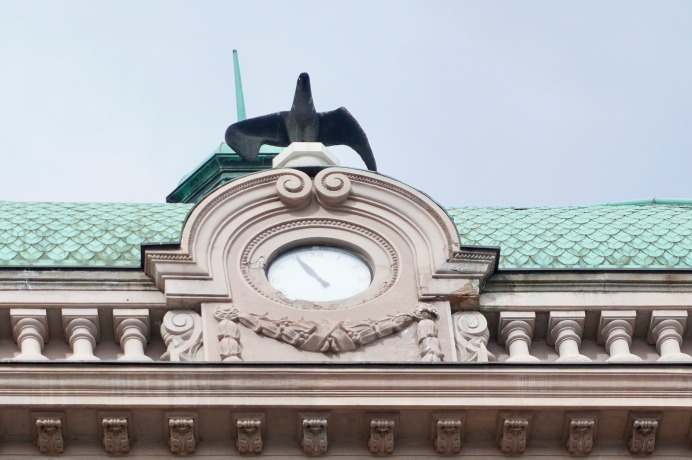
Before you stands the building of the Serbian Academy of Sciences and Arts, embedded directly into the city’s main pedestrian artery. Here, the Academy is part of the urban stage, its showcase. The style of the building can be divided into two layers: academicism provides the strict syntax — symmetry, clear composition, assured proportion; Art Nouveau adds accents — the softness of the plastic forms, decorative freedom, a living gesture. The result is a rare balance: the building simultaneously displays status and leaves an impression of creativity, intellectual prestige, and originality.
Inside are a library, an archive, a gallery, and a lecture hall. After the Second World War, the interiors were reworked, but the façade preserved its role as an anchor. Here too, the idea of renewing memory was at work: the external representation of cultural artefacts remains stable, while the content changes — or, more precisely, adapts to the rhythm of time. This work was led by the émigré architect, our compatriot Grigory Samoylov.
Samoylov is a figure to whom our route will return again and again. His biography and post-war legacy in Belgrade have become the subject of museum and archival work, as well as exhibition projects. It is worth emphasizing that he belonged to the younger generation of Russian émigrés, formed already within the Yugoslav environment, and that his work included academicism, modernism, and interior design.
An important detail: when we speak about Russians in Belgrade, this is not only a story of “longing for home” or of temporary dwellers with “suitcases at the station,” waiting for the possibility of departure. Many Russian émigrés became part of the environment and sought to integrate into local reality: some designed buildings, some opened schools, some taught law, some staged performances, and some simply tried to build a new life — and did so with genuine professionalism.
Among the Russian architects organically woven into the eclectic fabric of interwar Belgrade was Pyotr Dmitrievich Anagnosti. His family history was connected with Serbia from the very beginning: his father, who served in the Odessa administration, organized accommodation for Serbian soldiers in 1914, established a hospital for them, and donated funds for the maintenance of boarding schools.
In 1919, Anagnosti emigrated with his family through Constantinople to Belgrade, where he graduated from the Russian-Serbian Gymnasium and then from the Department of Architecture at the Technical Faculty of the University of Belgrade. Already as a student, he showed outstanding ability in descriptive geometry, and his works were exhibited at shows.
Anagnosti’s professional path developed in collaboration with the major architects of the era: he worked in Bogdan Nestorović’s atelier, then with Aleksandar Deroko, participated in the design of the dormitory of the Orthodox Theological Faculty, and worked on the projects of the Faculty of Law, the Veterinary Faculty, and the Kolarac People’s University together with Petar Bajalović. The author of more than twenty residential and public buildings in Belgrade and other cities of Yugoslavia, he designed rental houses, banks, and administrative buildings; his projects received awards, and some were realized only after the war.
Having survived captivity during the Second World War, Anagnosti nevertheless returned to Belgrade and became a professor, dean of the Faculty of Architecture, and the author of numerous textbooks. His work combined academicism, the Serbian-Byzantine tradition, and modernism — a stylistic eclecticism that naturally corresponded to the architectural destiny of twentieth-century Belgrade. For our route, Anagnosti is one of the key figures, since he had a hand in many of the points we are considering. And now we are approaching one of them.