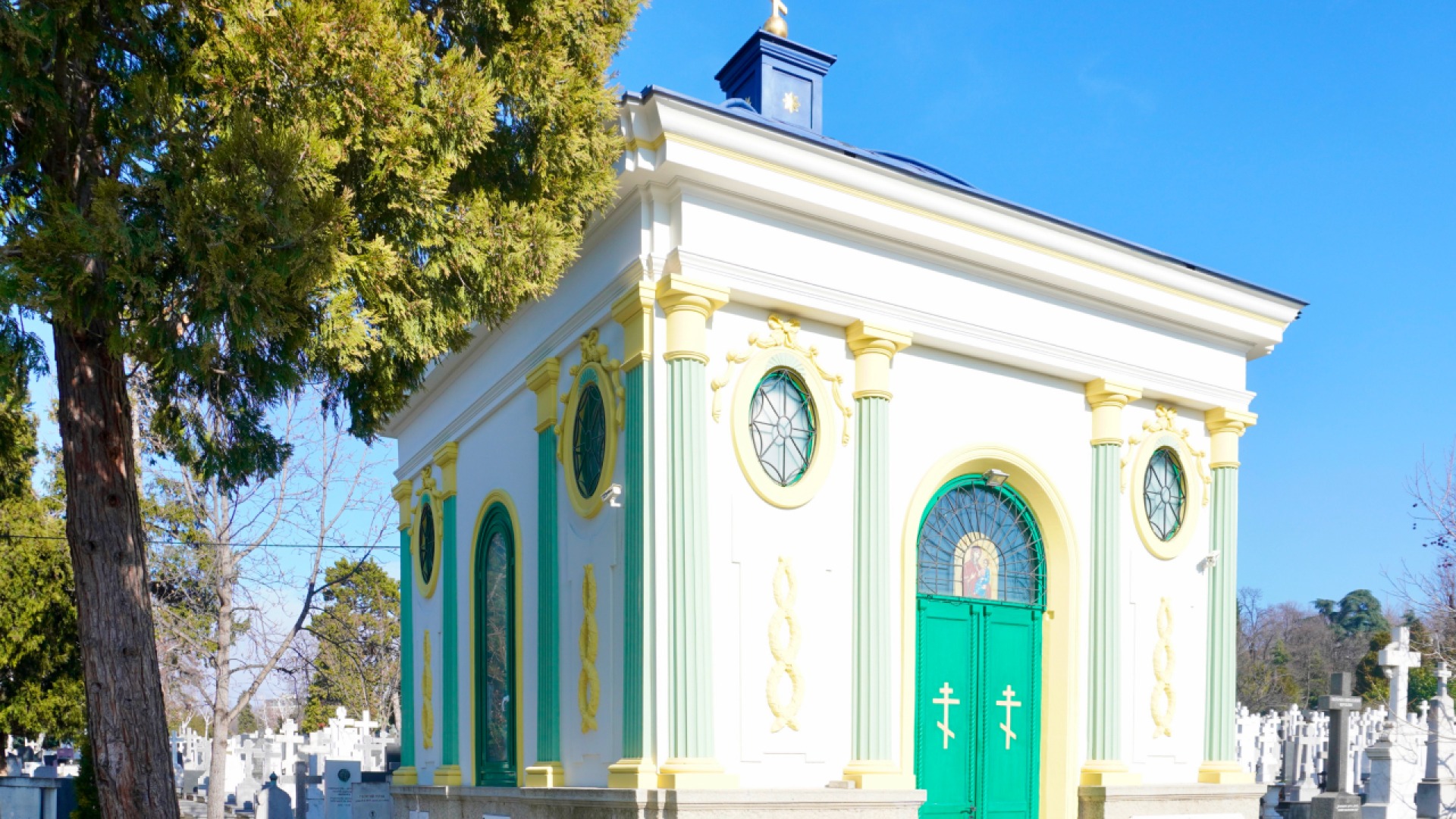
The Iveron Chapel at the New Cemetery
The Iveron Chapel is a white-and-blue monument to a lost homeland, built as a symbol of conciliarity, memory, and continuity.
округ Белград, Звездара, Новое кладбище
The Iveron Chapel at the New Cemetery is a transferred shrine, a gesture of memory that can almost be felt physically: as if people had said to themselves — if it was destroyed there, we will restore it here.
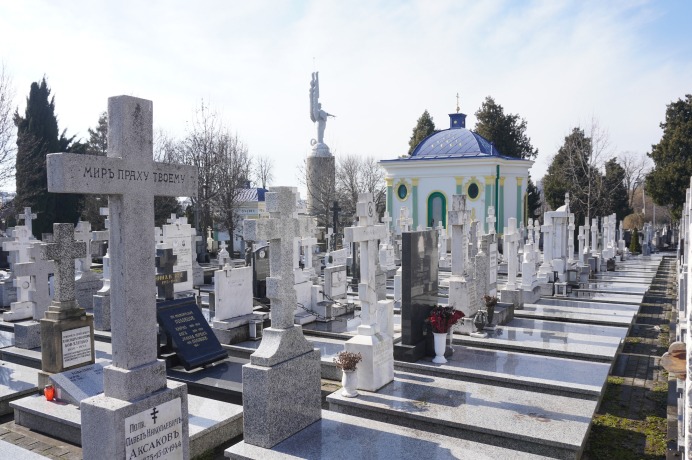
The chapel was built in 1930–1931 in the Russian section of the New Cemetery after the Soviet authorities destroyed the Iveron Chapel by the Resurrection Gate in Moscow in 1929. The design was prepared by the military engineer Valery Vladimirovich Stashevsky.
The fundraising campaign is a story in itself. Donations came from Yugoslav King Alexander I, Prince Paul, Princess Olga, members of the Russian Imperial House in exile, Russian and Serbian church communities, and numerous émigrés around the world. This matters: the chapel was a collective undertaking, assembled “thread by thread,” and for that reason became an exceptionally enduring symbol.
The foundation stone was laid on 22 April 1930: Metropolitan Anthony Khrapovitsky of the Russian Orthodox Church Outside Russia laid the foundation of the building, and a handful of Russian soil was placed within it. On 5 July 1931, the chapel was consecrated by Serbian Patriarch Varnava and Metropolitan Anthony.
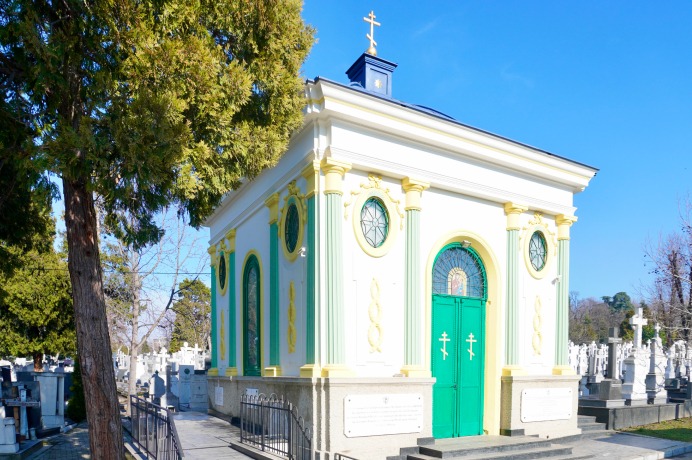
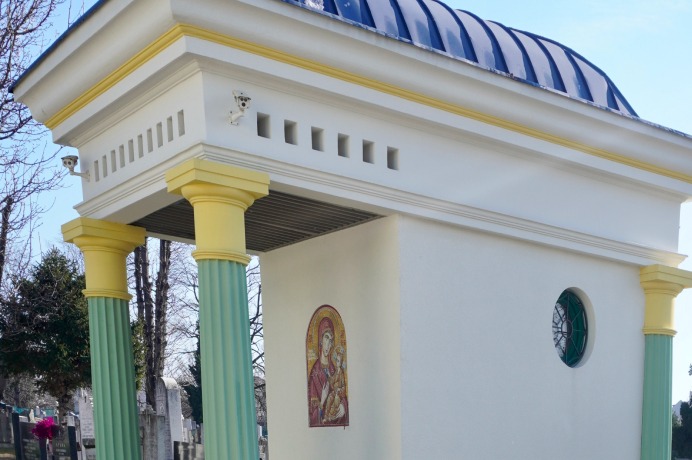
Now, to the architectural nuances. The chapel reproduced the demolished Moscow chapel, but it was taller and wider. Its appearance was carefully conceived in terms of colour: the façades were white, the fluted pilasters green, the capitals and bases yellow; the chapel was crowned by a blue half-dome decorated with golden stars.
On the exterior walls, two large icons were placed in niches: Saint Nicholas, in memory of Emperor Nicholas II, and Saint Alexius, in memory of Tsarevich Alexei; these icons were brought from Mount Athos. Inside, the shrines of Russia’s “principal cities” were gathered together: in memory of Moscow — the Iveron Icon of the Mother of God, a copy from Mount Athos; in memory of Kyiv — the icon of the Dormition; in memory of Petrograd — a copy of the Image of the Saviour Not Made by Hands. All of this transformed the chapel into a small island of the lost homeland.
And there is another semantic layer — quite literally beneath one’s feet: the chapel has a crypt. It contained sarcophagi with the bones of Russian soldiers who had fallen on the Salonica Front and as part of the Russian batteries that defended Belgrade in 1915; the belongings of the fallen soldiers were also kept there, the last material testimonies of physical presence.
The creator of the chapel, the already familiar Valery Stashevsky, is also an important figure: he was extraordinarily prolific in Belgrade, and his name is associated with a number of buildings created for the Russian community, including the Iveron Chapel.
His biography as a whole is dramatic — and it reminds us that even those who built a temple of memory themselves lived inside the brutal twentieth century. For a long time, conflicting versions circulated about Stashevsky’s fate: some wrote that he had died in the USSR after his arrest, while others claimed that he had died in Morocco in the 1950s. This uncertainty largely made him a “vanished” figure: it was as though neither acquaintances, nor friends, nor even relatives knew how — or wished — to speak about him. But reality, as practice shows, can be far harsher and more prosaic than we are used to imagining: on 31 December 1944, the sixty-two-year-old Stashevsky was arrested in Belgrade by SMERSH officers. The investigation was brief: only four interrogations, no concrete charges, and questions mainly concerning his emigration and his circle. Valery Vladimirovich Stashevsky was executed by firing squad in Belgrade on 21 February 1945.
Not far from the chapel, the memorial line continues with a monument to Russian soldiers, but our route leads further on: toward the Church of Saint Alexander Nevsky.
Architects
Valery Vladimirovich Stashevsky
Routes
Holy Connections
Address
округ Белград, Звездара, Новое кладбище