Branko’s Bridge
Branko’s Bridge is an iconic crossing over the Sava, a symbol of the unity of Belgrade and Zemun, combining Romano-Byzantine architectural motifs with a rich historical meaning.
Бранков мост, Белград
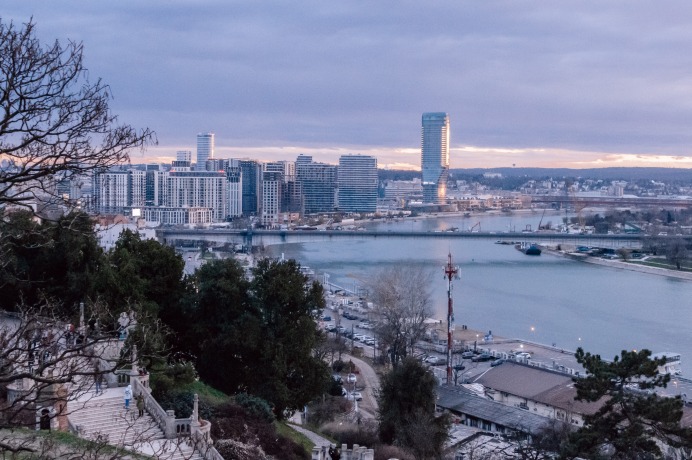
And here we are, at last, by Branko’s Bridge — one of the main crossings over the Sava, though its history begins under another name. It was once known as the Zemun Bridge, and later as the Bridge of King Alexander I. It was built between 1929 and 1934. The bridge was meant to connect not merely the two banks of the river. It linked Belgrade with Zemun — a former town of the Habsburg Monarchy. For centuries, these territories had stood on opposite sides of political and cultural borders. The new bridge was conceived as a symbol of unification — both literally and metaphorically.
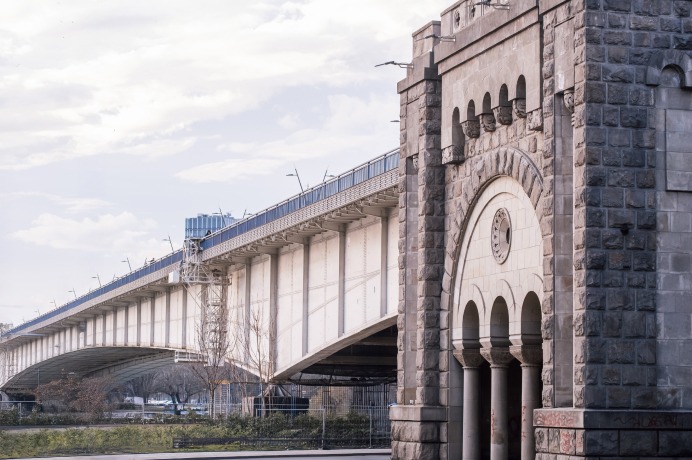
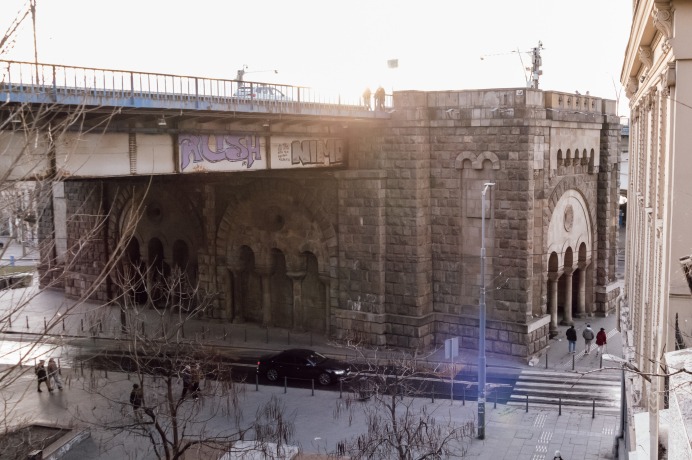
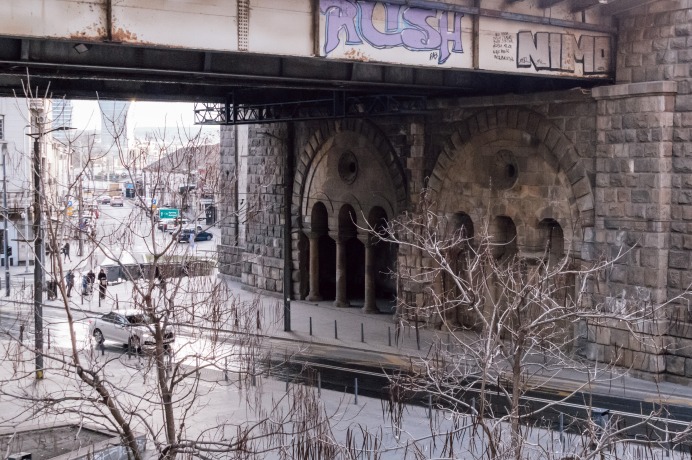
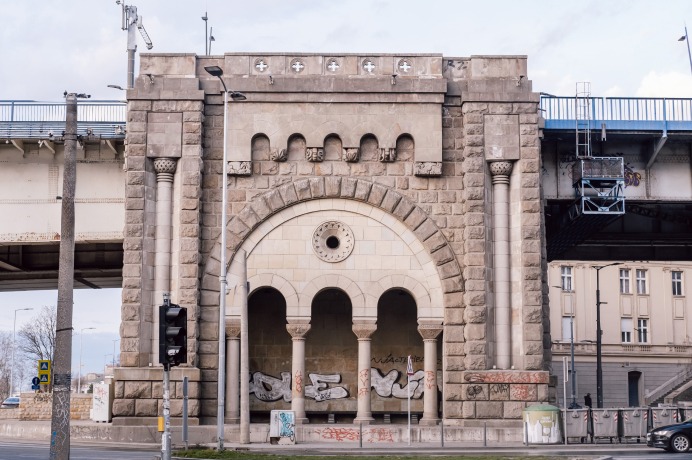
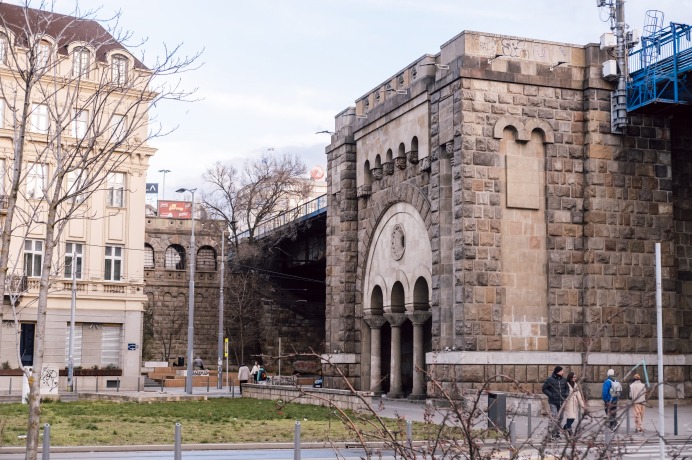
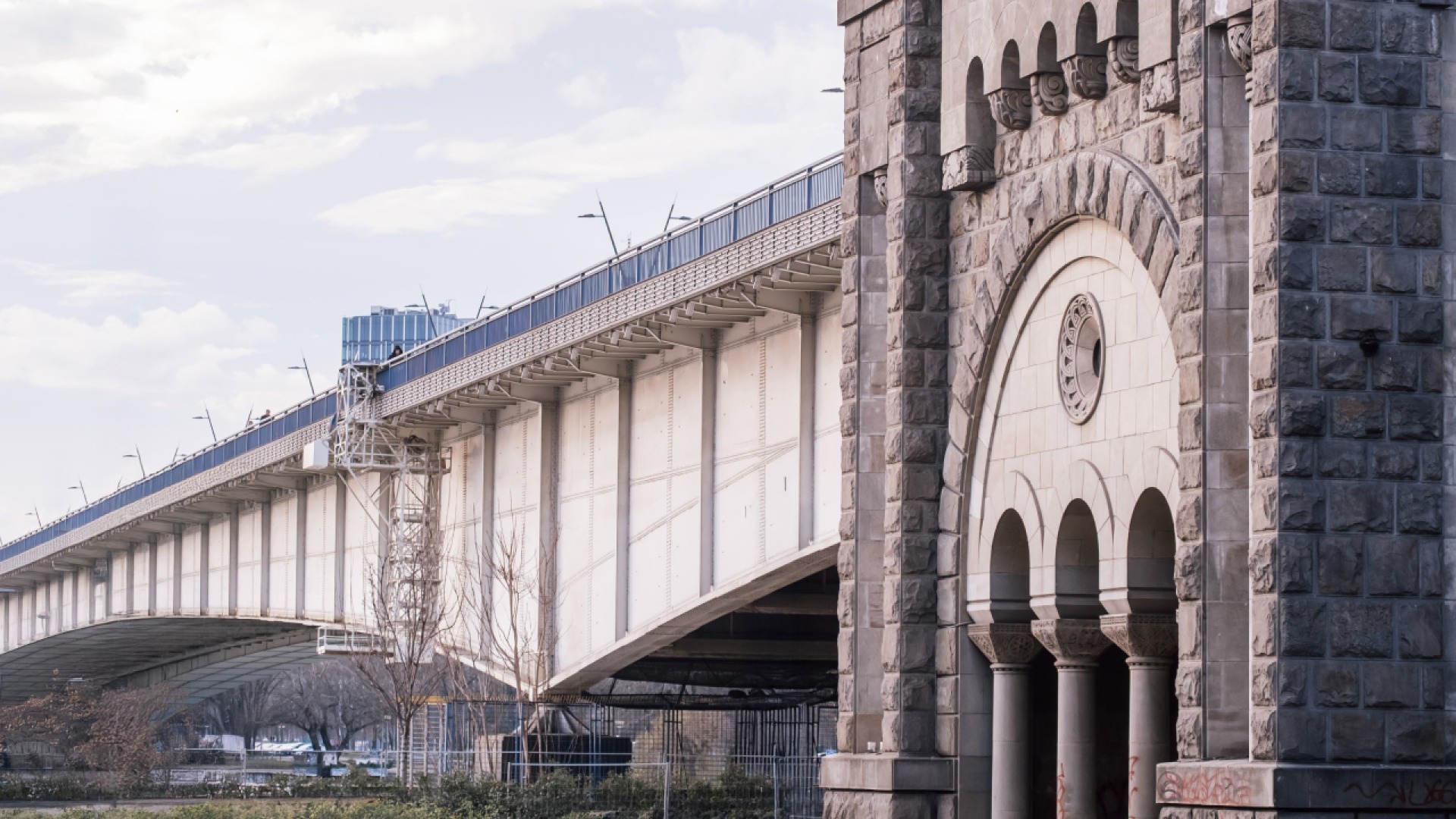
The engineering structure was complemented by architectural elements that gave the bridge representativeness and symbolic weight. The five massive river piers supporting the metal superstructure were designed by our old acquaintance, the Russian émigré architect Nikolai Nikolaevich Krasnov.
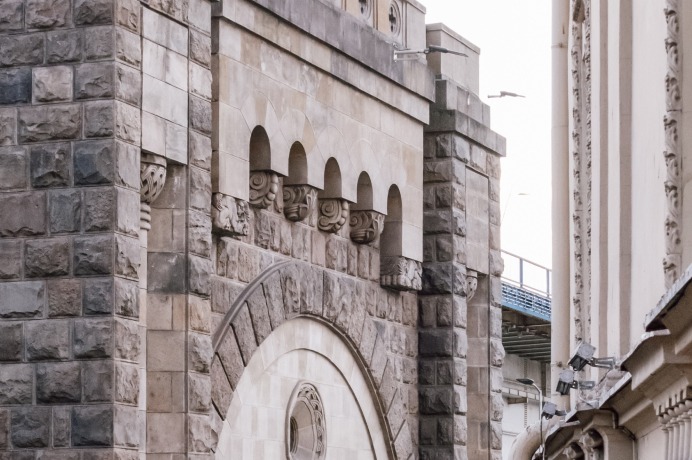
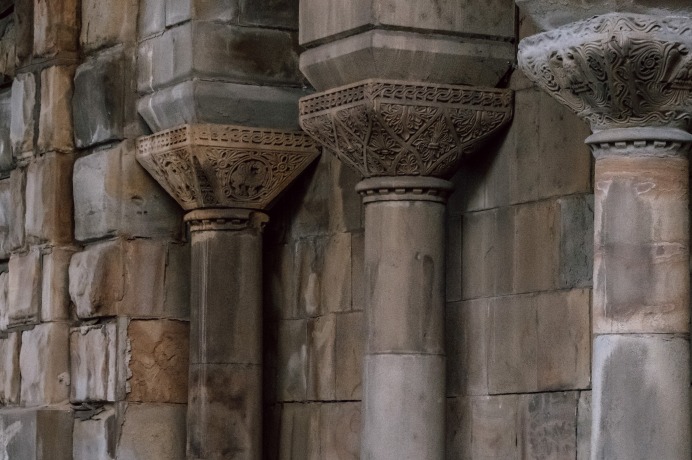
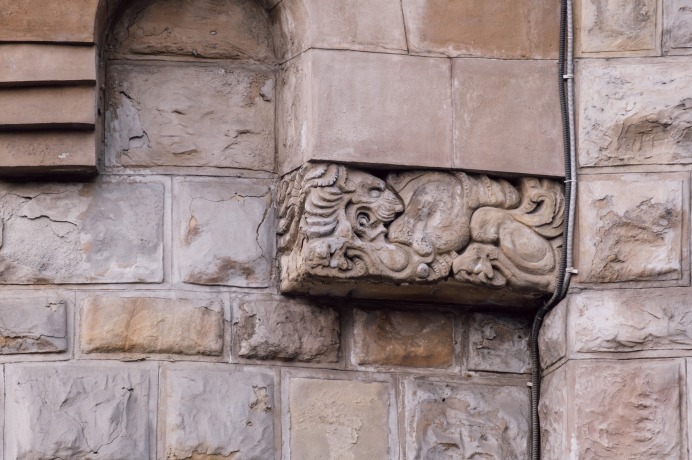
The architectural language of these piers was not chosen by chance. Contemporaries called it “Romano-Byzantine” — an eclectic yet expressive combination of Romanesque and Byzantine motifs. The stone ornamentation gave the industrial structure historical depth and connected it with the traditions of the region’s medieval architecture.
At the end of 1933, the city authorities decided to strengthen the artistic image of the bridge. The idea emerged to adorn the iron structure with monumental sculpture, so that it would harmonize with the historic centre of the city and at the same time become a powerful ideological gesture. The commission was entrusted to one of the most famous sculptors of his time — Ivan Meštrović. Meštrović proposed a grand solution: four colossal statues, each about ten metres high. They were to be installed two on each bank, directly on Krasnov’s “Romano-Byzantine” piers. The figures were to rise on slender two-column pedestals about twenty-two metres high.
The sculptural programme was carefully conceived. On the eastern bank, two medieval rulers were to be placed: King Tomislav, the first Croatian king, and Emperor Dušan, one of the most powerful Serbian rulers. They symbolized the “golden ages” of Croatian and Serbian history.
On the western bank, two more figures were to appear: the Bosnian king Tvrtko I Kotromanić and King Peter I Karađorđević, the father of Alexander I. These images connected the medieval and modern eras, forming a pantheon of “Yugoslav” rulers. Meštrović’s project, unfortunately, remained unrealized, but the very idea shows how great a political and symbolic significance was attached to this bridge.
Today, walking across Branko’s Bridge, it is difficult to imagine that gigantic horsemen, embodying different epochs and peoples, might have towered above us.
The bridge also has its own history of names — no less expressive than its architecture. We touched on this subject briefly at the beginning of our discussion. In the interwar period, it bore the name of King Alexander I; after the Second World War, during socialist Yugoslavia, it was officially renamed the Bridge of Brotherhood and Unity — in the spirit of the time.
But Belgraders rarely use official names, preferring to endow architectural objects with meanings of their own. In everyday speech, the bridge came to be called Branko’s — after Brankova Street, which leads to it. The street itself was named after the nineteenth-century Serbian Romantic poet Branko Radičević.
In 1984, the name acquired another, tragic dimension. The well-known Yugoslav writer Branko Ćopić jumped from the bridge. Since then, the name “Branko’s Bridge” has been perceived ambiguously. Today, many residents of the city no longer think about which Branko it is named after — the nineteenth-century poet or the twentieth-century writer. It is said that Ćopić recalled his first arrival in Belgrade: in 1936, young and unknown to anyone, he slept under this very bridge. At that time it was called the Bridge of King Alexander — the very bridge later destroyed during the war. He pointed to a bench beneath the bridge and said: “This bridge is my fate.” Since then, the bridge has acquired a sorrowful reputation: it is called the “suicide bridge,” with dozens of attempts to end one’s life taking place here each year.
Today, to use Milorad Pavić’s language, we began to study the biography of Belgrade — leafing through its chronicle by way of façades and bridges, in other words, through the imprints of eras left to us by Russian architects. We began at the National Assembly; looked into the Archives of Serbia, where memory is preserved; stopped by the Main Post Office and the Constitutional Court; entered the space of the Patriarchate, where the sacred is closely intertwined with the modern; and ended the route on Branko’s Bridge — a symbol of the connection between banks, epochs, polities, and human destinies. Before us was the living fabric of the city, carefully woven through the synergy of Russian and Serbian architects, artists, and writers. And if at the beginning of the route we spoke of the language of power and the imperial form, we can now add: this city also has a dimension of memory.