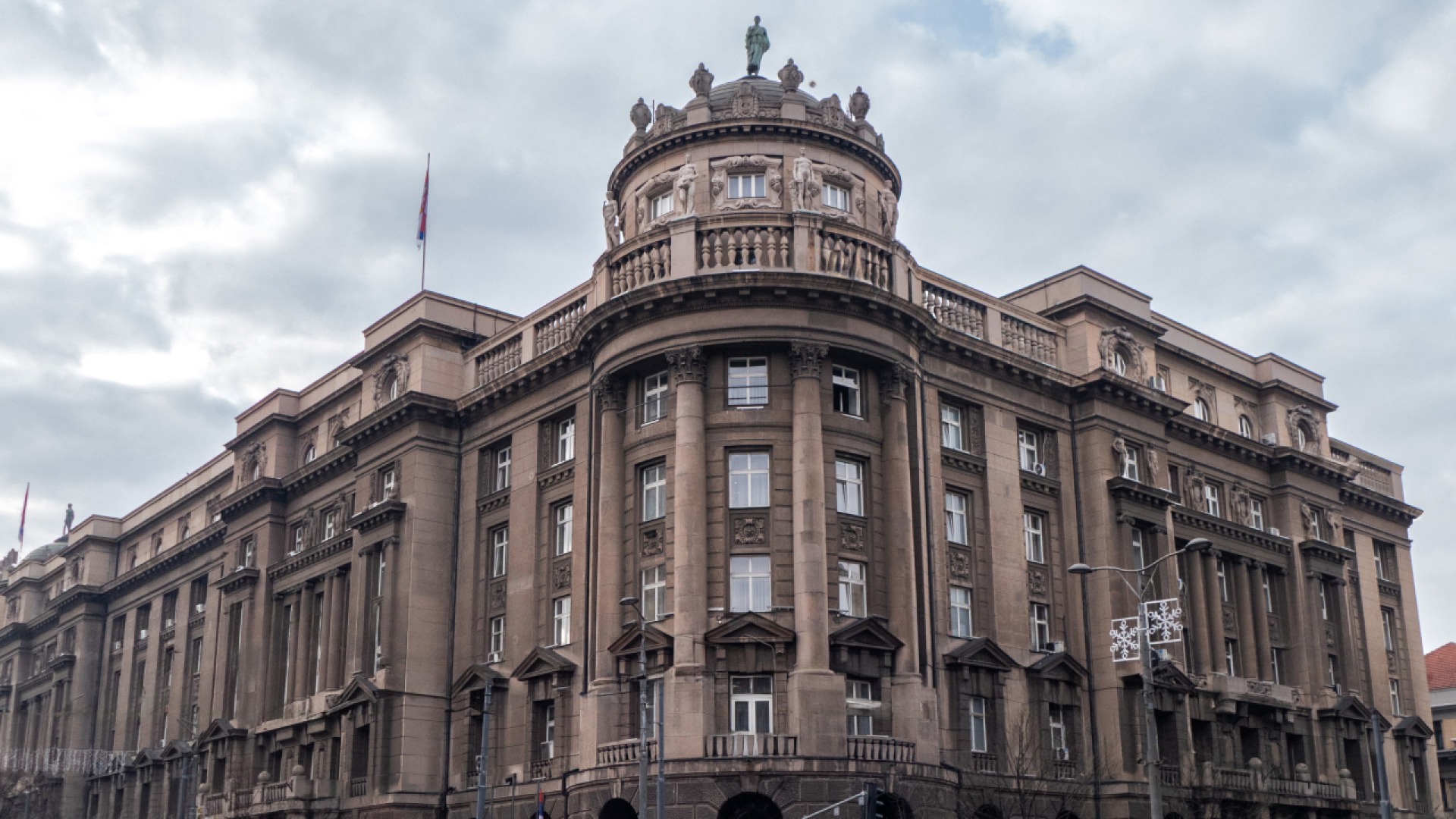
The Ministry of Foreign Affairs of Serbia
A striking example of interwar academicism and an architectural landmark of Belgrade.
ул. Кнеза Милоша, 24–26, Белград
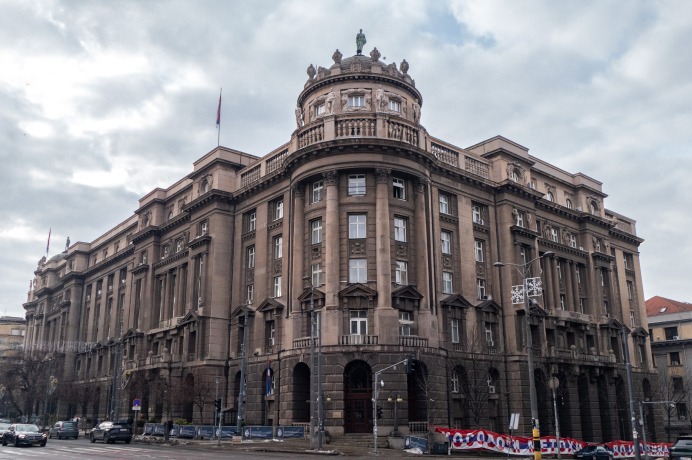
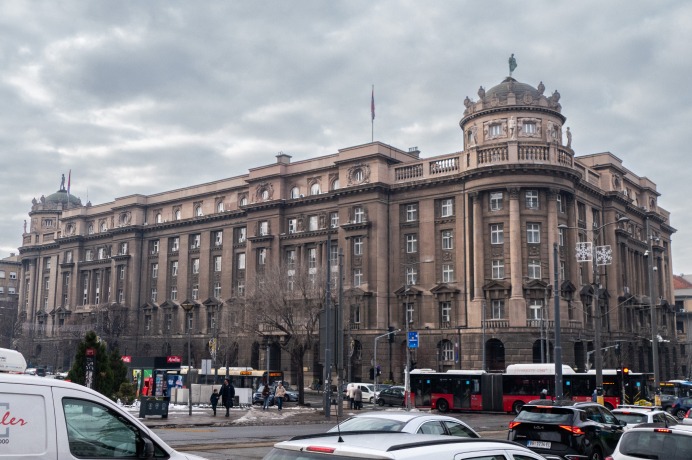
Strange as it may sound, today’s Ministry of Foreign Affairs of Serbia is in fact the former palace of the Ministry of Forests and Mines and the Ministry of Agriculture and Water Resources. It was originally built for these two departments, while its present function is the result of circumstances and the twists of institutional life.
From an architectural point of view, this is one of the most representative examples of interwar academicism in Belgrade. And the history of its construction truly resembles a detective story — one about how a project “passes from hand to hand,” preserving its foundation while changing its meaning.
According to the Belgrade Institute for the Protection of Cultural Monuments, the architects Dragiša Brašovan and Nikola Nestorović developed the design in 1923, and the building had already been erected up to the level of the first floor. In 1926, the completion of the works was entrusted to our old acquaintance Krasnov: he preserved the general concept, but reinterpreted it in his own way, creating a new design for the façades and the interiors, and transforming an unfinished structure into a complete ideological image of the state.
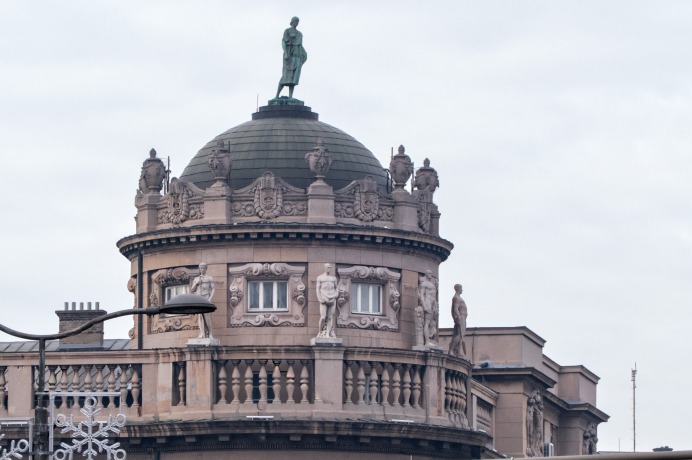
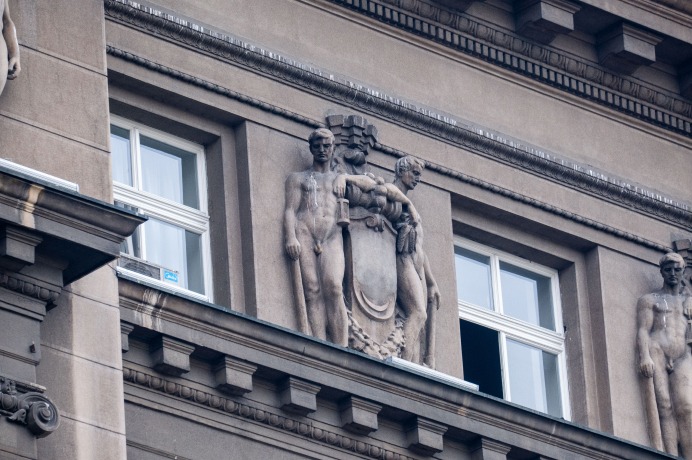
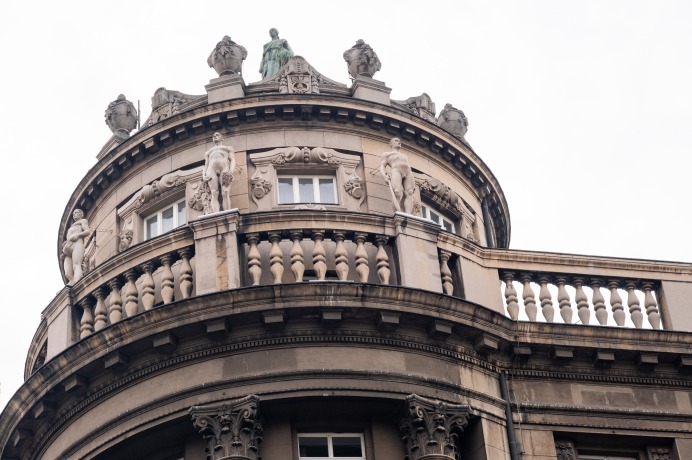
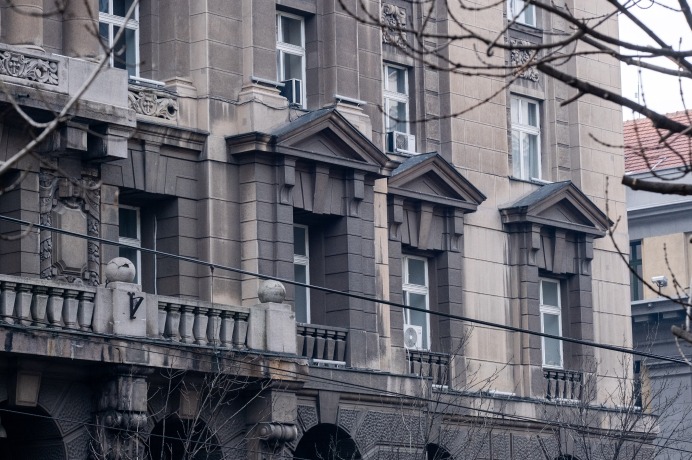
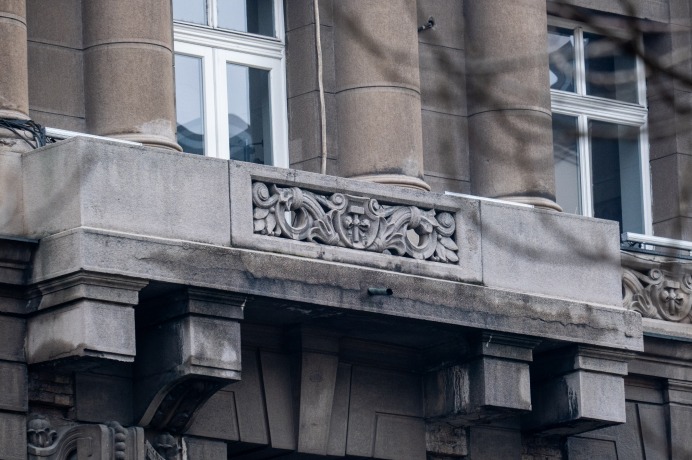
The façades are deliberately fragmented and animated: the rhythm of the windows, the high roof cornice, the balustrades, the rich sculptural decoration. Most importantly, the corners are emphasized by grand domes, turning the building into the dominant feature of the intersection.
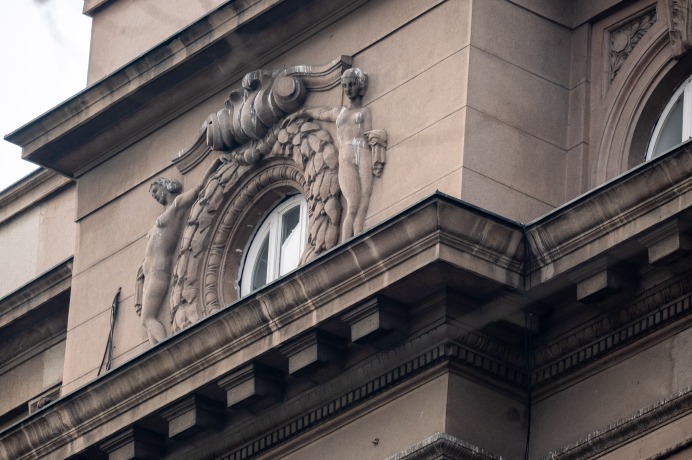
The freestanding sculpture and reliefs were executed in bronze and artificial stone, based on sketches by the Serbian sculptors Dragomir Arambašić, Živojin Lukić, and Petar Palavičini. They symbolize the spheres of activity of the ministries. The tops of the domes contain allusions to forestry and the harvest, while the façades refer to animal husbandry, agriculture, and viticulture.
Further along Kneza Miloša stands a building where the Russian architectural history of Belgrade is associated not with Krasnov, but with another name. We are heading to the “Stone Palace,” the old General Staff building — not to be confused with the new complex — which today houses special military services.