The Government of Serbia
A monumental building with a corner composition, a dome, and sculptures, embodying the idea of the state and the experience of trials endured.
ул. Неманина, 11, Белград
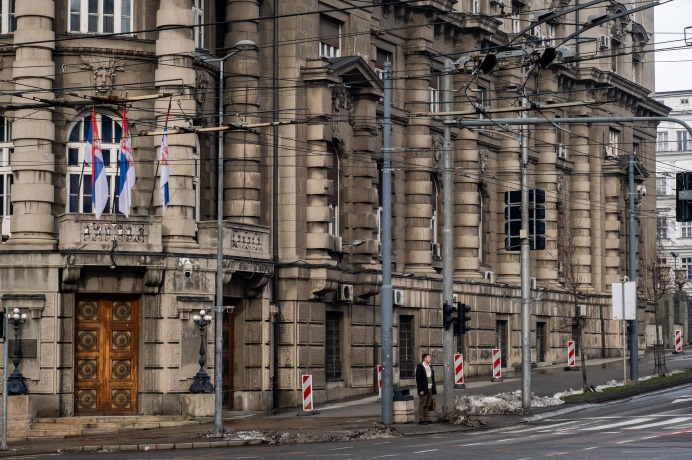
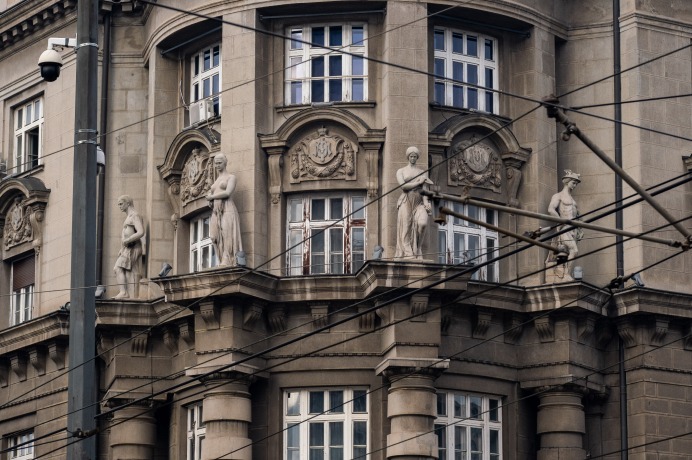
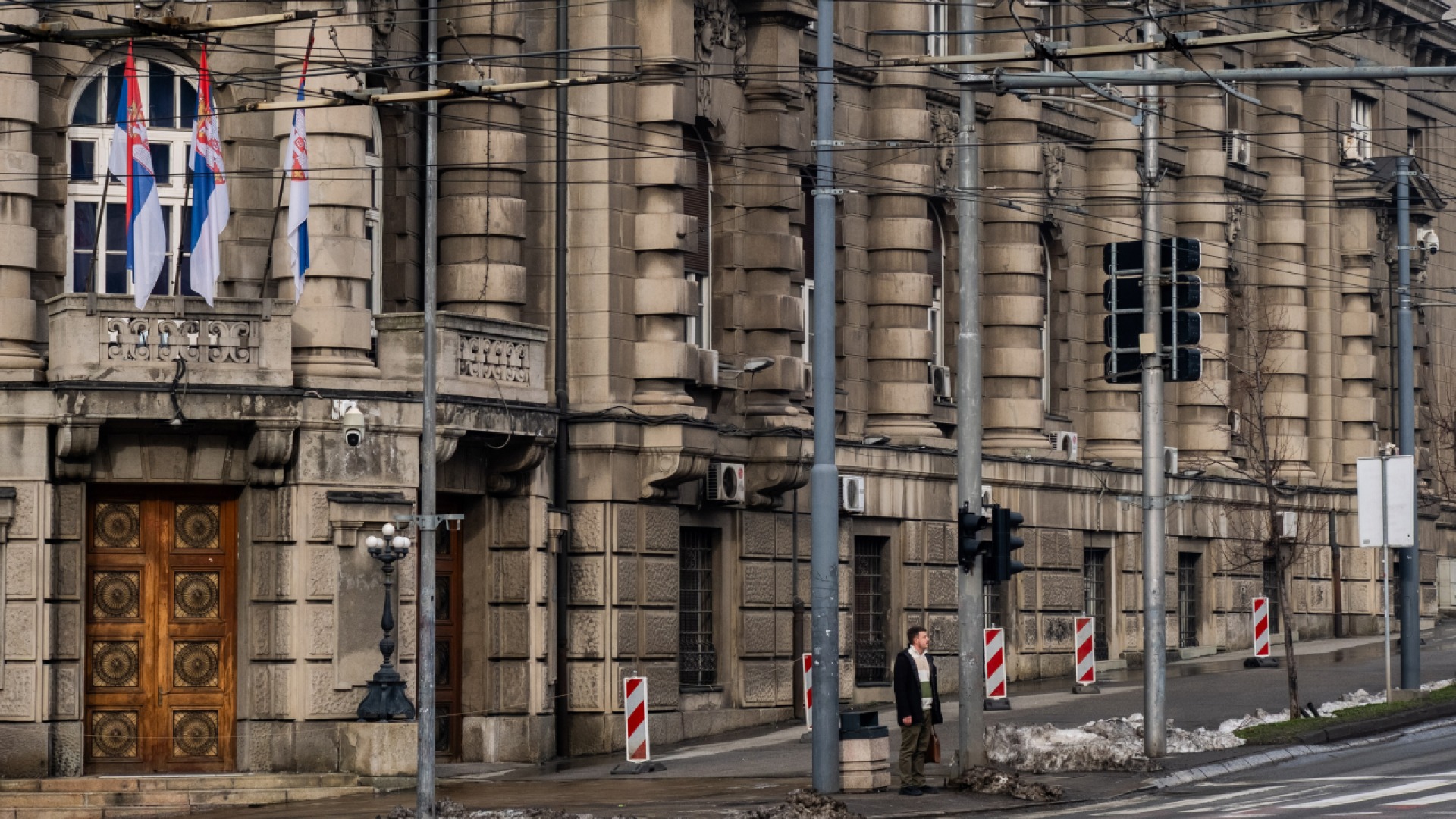
The building of the Government of Serbia is one of the central points in Belgrade’s state topography. You are standing on a corner — and part of the façade also faces Kneza Miloša Street: this is precisely the “corner” that Krasnov turns into a stage.
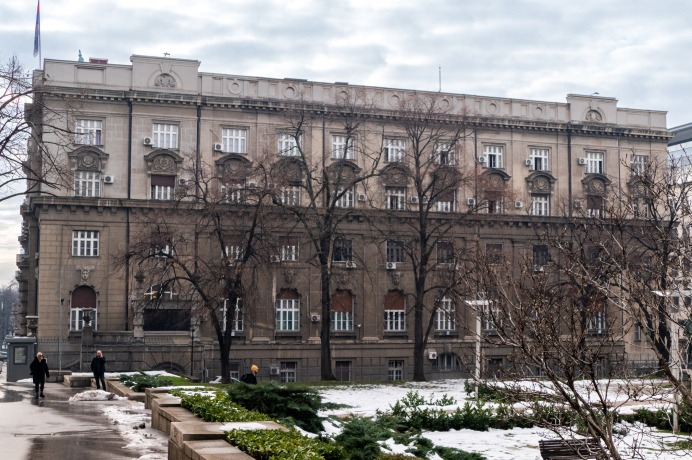
The building was constructed between 1926 and 1928 according to the design of Nikolai Krasnov and was originally intended for the Ministry of Finance.
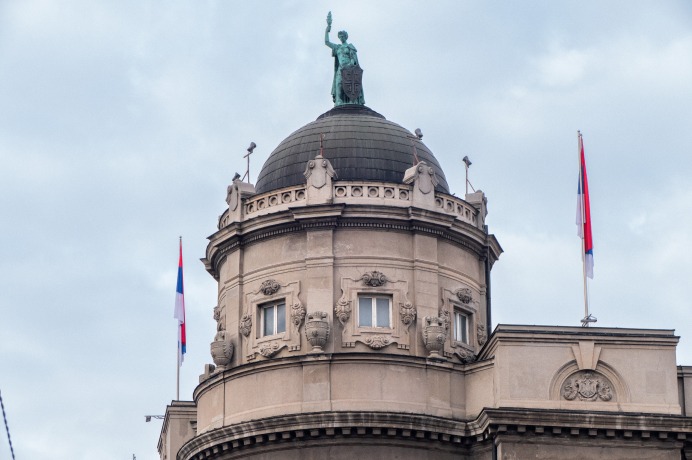
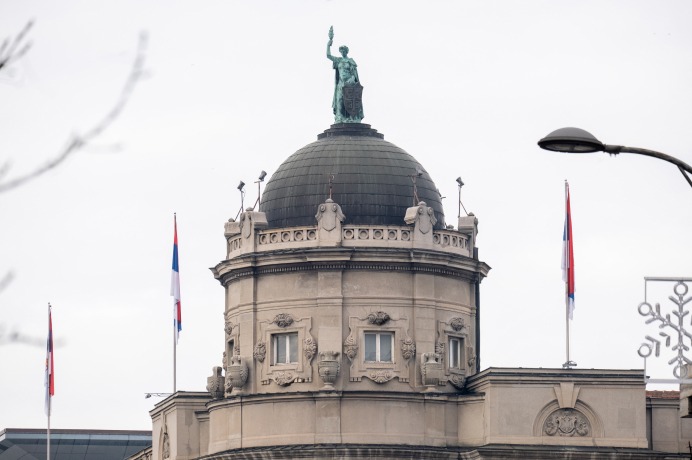
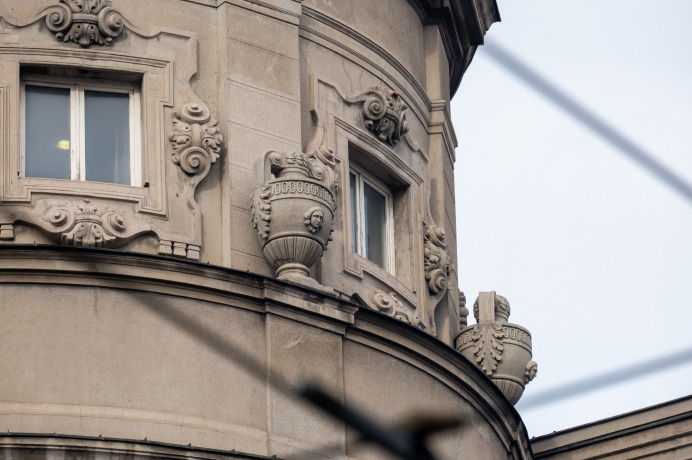
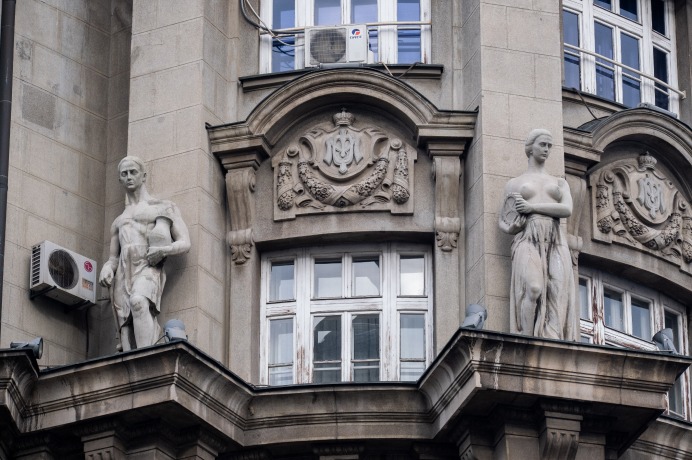
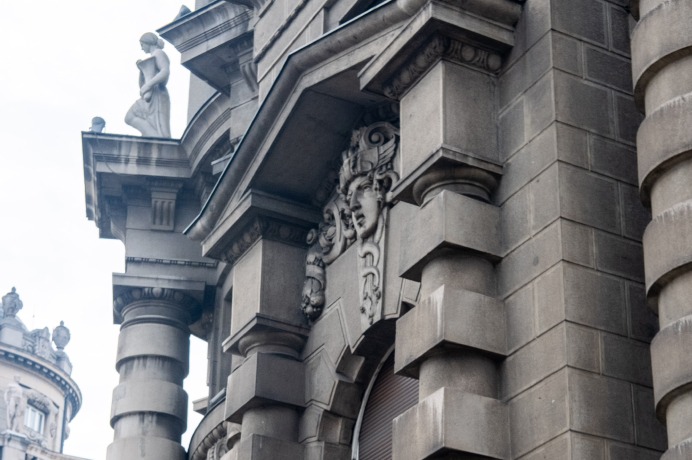
The plan of the building is a square with an inner courtyard; its academic-style façades are arranged in a monumental rhythm. Massive pilasters and cornices create “ornamental projections,” while the window frames establish a strict cadence. And the most intriguing point is precisely the corner. Krasnov had a particular fondness for the “corner,” because in the perspective of the street it is the corner that meets the viewer first. The building stands out through its emphatic corner solution: massive pilasters dominate the surroundings, underscoring the importance of the state functions that were once performed here in Yugoslavia and continue to be performed here today in Serbia.
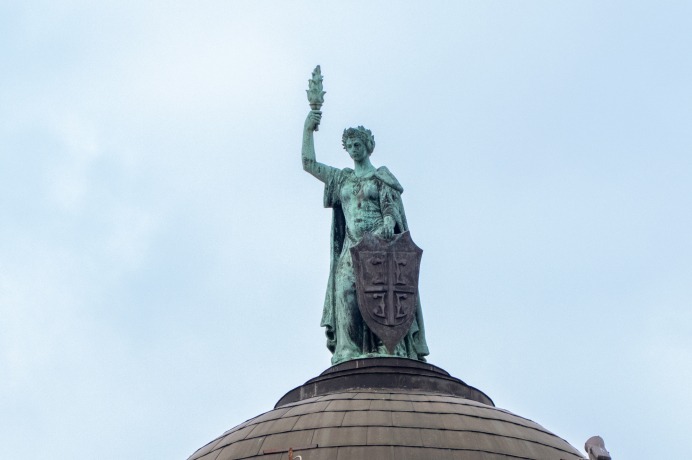
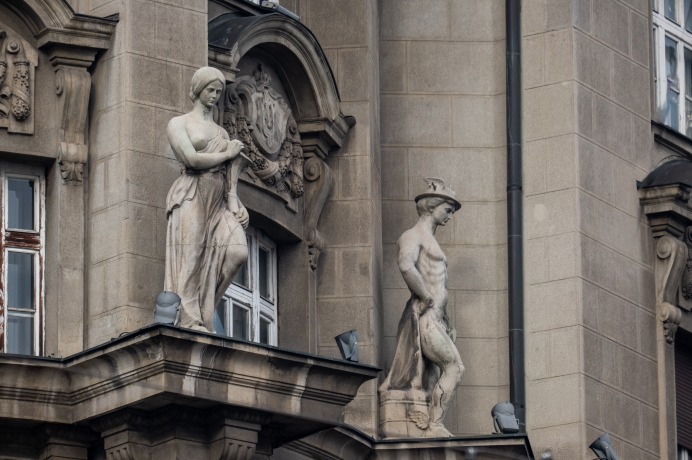
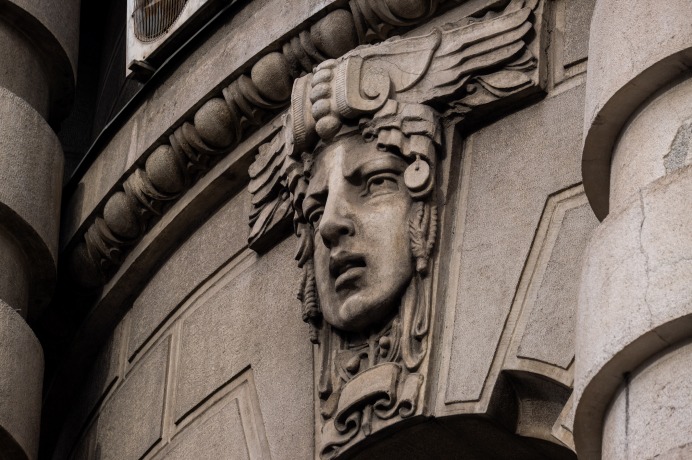
Its vertical axis is emphasized by a domed termination, crowned by a bronze sculpture personifying Yugoslavia. The author of this figure and of the façade allegories is the sculptor Đorđe Jovanović. What are these allegories? Their names sound like a pantheon of the gods of economy: Fertility — with a cornucopia, Art, Industry, and Mercury — the god of trade. The choice of precisely these motifs is explained by the building’s original function: the Ministry of Finance was meant to symbolically embody the economic foundations of the state.
There is also another dramatic layer — this one from the end of the twentieth century. During the NATO air strikes in 1999, the building was seriously damaged: its façades were wounded, its interiors harmed, and the restoration took about a year.
The Serbian writer Milorad Pavić, an eyewitness, wrote about this in his text A Biography of Belgrade: “The third millennium began in Belgrade a year earlier than everywhere else. In 1999, eighteen countries of Western Europe and the United States, members of NATO, attacked Yugoslavia. Over seventy-eight days of air raids, these new crusaders dropped on Belgrade and other Serbian cities more explosives than were detonated in Hiroshima at the end of the Second World War. One of Belgrade’s main streets, Miloša Velikog Street, has been unrecognizable ever since.”
And here we are, on a street whose original appearance was quite literally erased by the strikes — a street that has endured not only changes of epochs and regimes, but also the direct destruction of its own fabric. Today its façades have been restored, the glass once again reflects the sky, movement has returned to its familiar rhythm, yet the memory of 1999 remains inscribed in the space — as a hidden layer of the city’s biography.
Belgrade knows how to rebuild itself, but it never completely erases its traces: beneath the renewed surface there always remains the knowledge that this landscape was once torn apart and assembled anew.
History, as we can see, does not end with the raising of a façade. It continues in the cracks of the stone, in the traces of shrapnel, in the political and human conflicts that overlay architecture with a new layer of meaning.
And if this building has been restored and reintegrated into the life of the state, the fate of the other General Staff building — do not confuse the two! — the complex destroyed in 1999, still has not been definitively resolved.
Its ruins remain a painful point of urban memory: suspended between the idea of restoration, conservation, and possible new development. Thus architecture continues to live in the mode of an open question and ongoing debate — a reminder that the state in stone is never completed once and for all.