The Monastery of the Presentation of the Most Holy Theotokos — Vavedenje
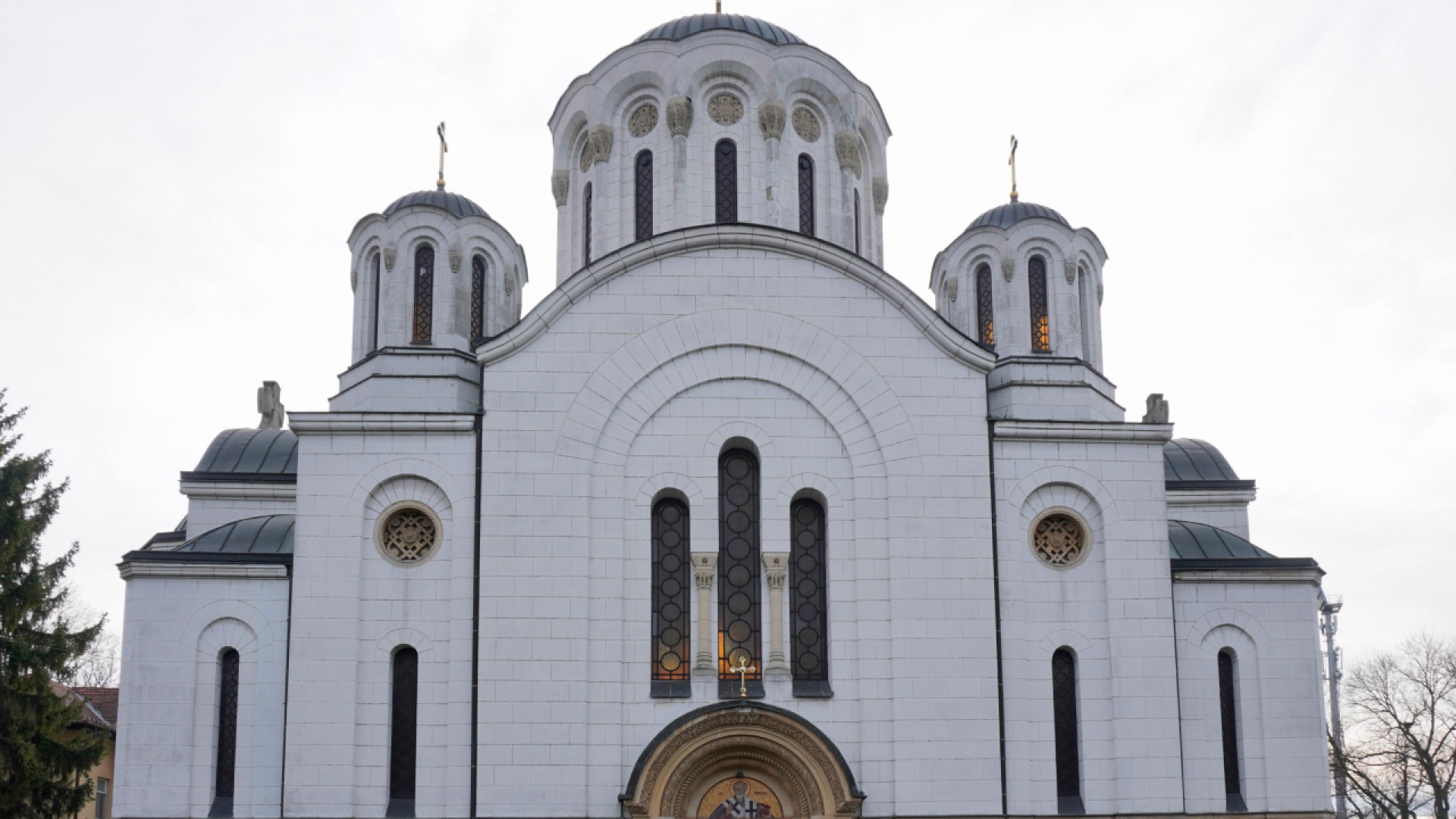
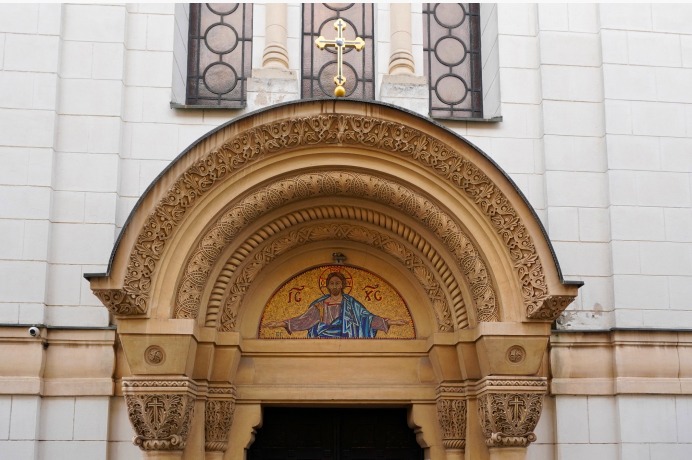
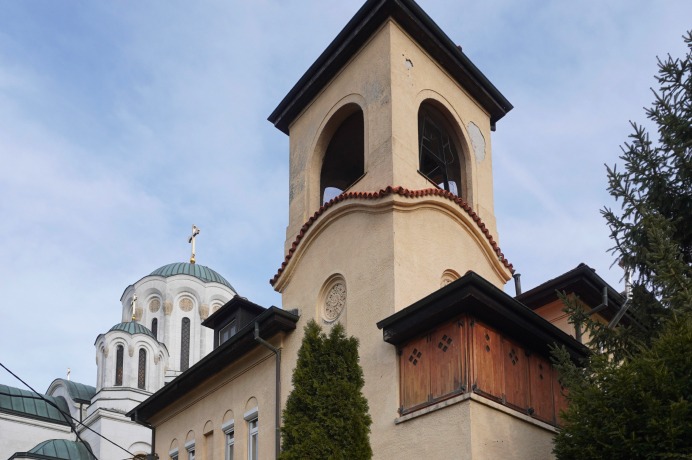
An outstanding spiritual centre of the Russian emigration: a five-domed church inspired by Serbian-Byzantine architecture, with a harmonious stepped composition, restrained decoration, and a solemn western portal.
ул. Љубе Јовановића, 8, Белград
The Vavedenje Monastery is one of the important spiritual nodes connected with the Russian émigré milieu.
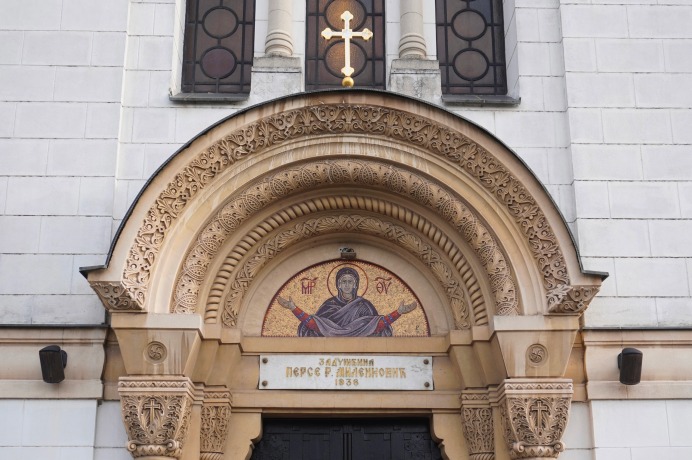
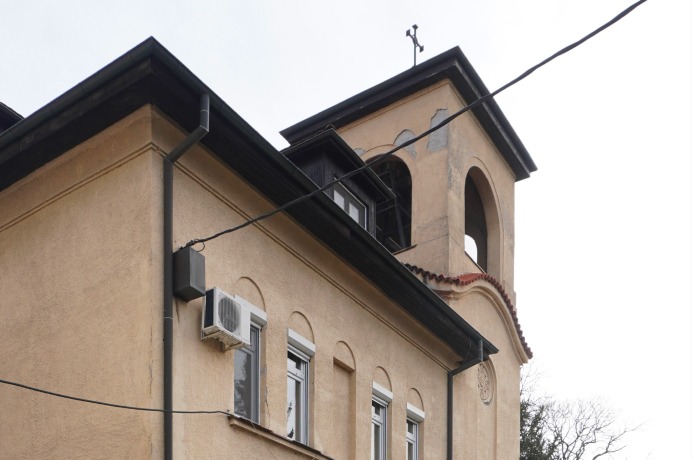
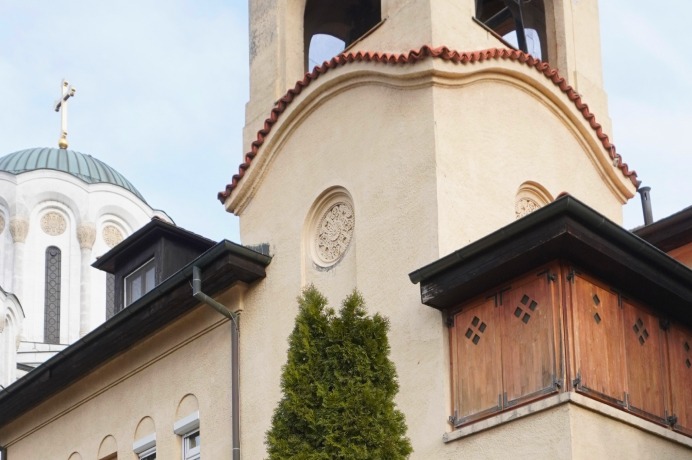
The complex includes the church and the monastic residential wing with cells, built in 1937 as a gift from the Belgrade benefactors Persida and Rista Milenković. The architectural history of the project is more complex than a single name: the sources mention Ivan A. Rik and Andrei V. Papkov as the authors of the church design.
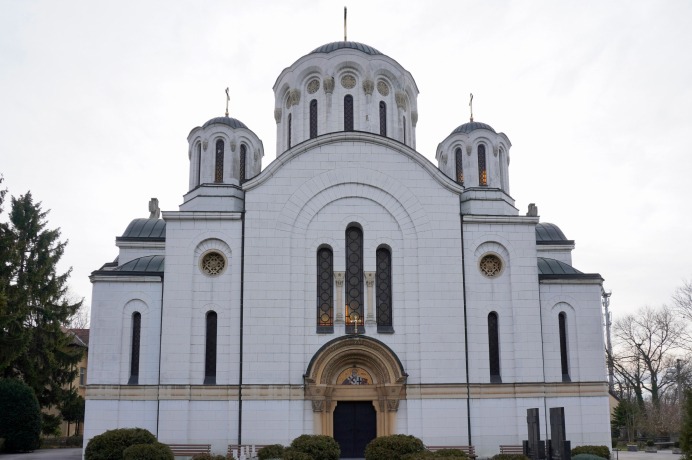
The architectural composition of the church is five-domed and based on a developed inscribed cross. The central dome is monumental, while four smaller domes are placed between the arms of the cross. In the very idea of the five-domed structure one can hear a reference to Serbian medieval architecture of the thirteenth and fourteenth centuries: this is not direct copying, but a tribute to memory and respect for familiar motifs of the local culture.
In his essay on Marcel Proust’s novel In Search of Lost Time, Merab Mamardashvili writes: “Marcel dipped the madeleine into a cup of tea, and suddenly joy seized him again. But this time he understood its cause, he was able to decipher it, to summon from the taste of the biscuit that had delighted him all the memories connected with childhood and with the places where he had once been. He remembered the landscape, the river, the birds, the flowers — all of this from a cup of tea, from a single sensation that coincided with a sensation he had experienced in the past.”
In a certain sense, these gestures toward medieval architecture — gestures of turning to the Serbian-Byzantine style, subtly and masterfully embodied by Russian architects — became for local residents that very “madeleine”: they revived the memory of history and of one’s own roots, of what many had attempted to violate, but what no one ultimately managed either to destroy or, perhaps even more importantly, to consign to oblivion.
From literary references, let us return to architecture: what matters here is the stepped quality — the concentration of volumes toward the centre. This is the device that makes the church feel “ascending”: you sense not only the verticality of the dome, but also the way the entire body of the building seems to gather itself into the upper point.
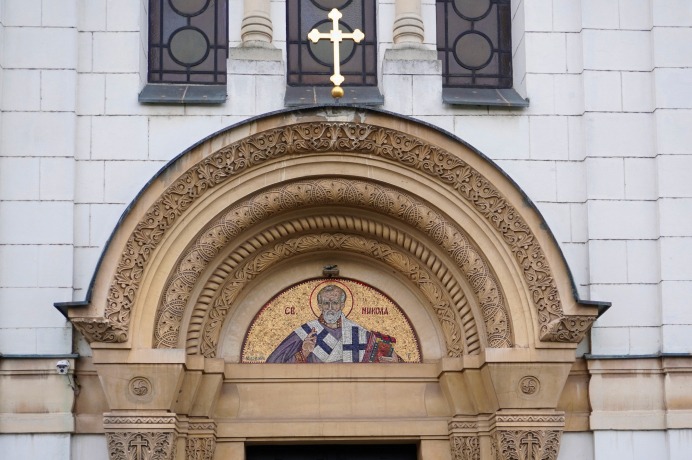
The decoration is restrained. Elongated window axes are notable, as are rosettes used as rare but precise accents, and the expressive trifora on the western façade. The western portal is designed with particular solemnity, with a broad staircase.
Inside, the liturgical logic is clear: to the east there is a spacious apse — semicircular on the inside and five-sided on the outside — with access to the side rooms. The wall paintings were executed later, in the 1970s and 1980s, but what matters is that the architecture was originally designed to receive painting, furnishings, and the acoustics of worship.
Our next stop is the Small Church of Saint Sava on Vračar.
Routes
Holy Connections
Address
ул. Љубе Јовановића, 8, Белград