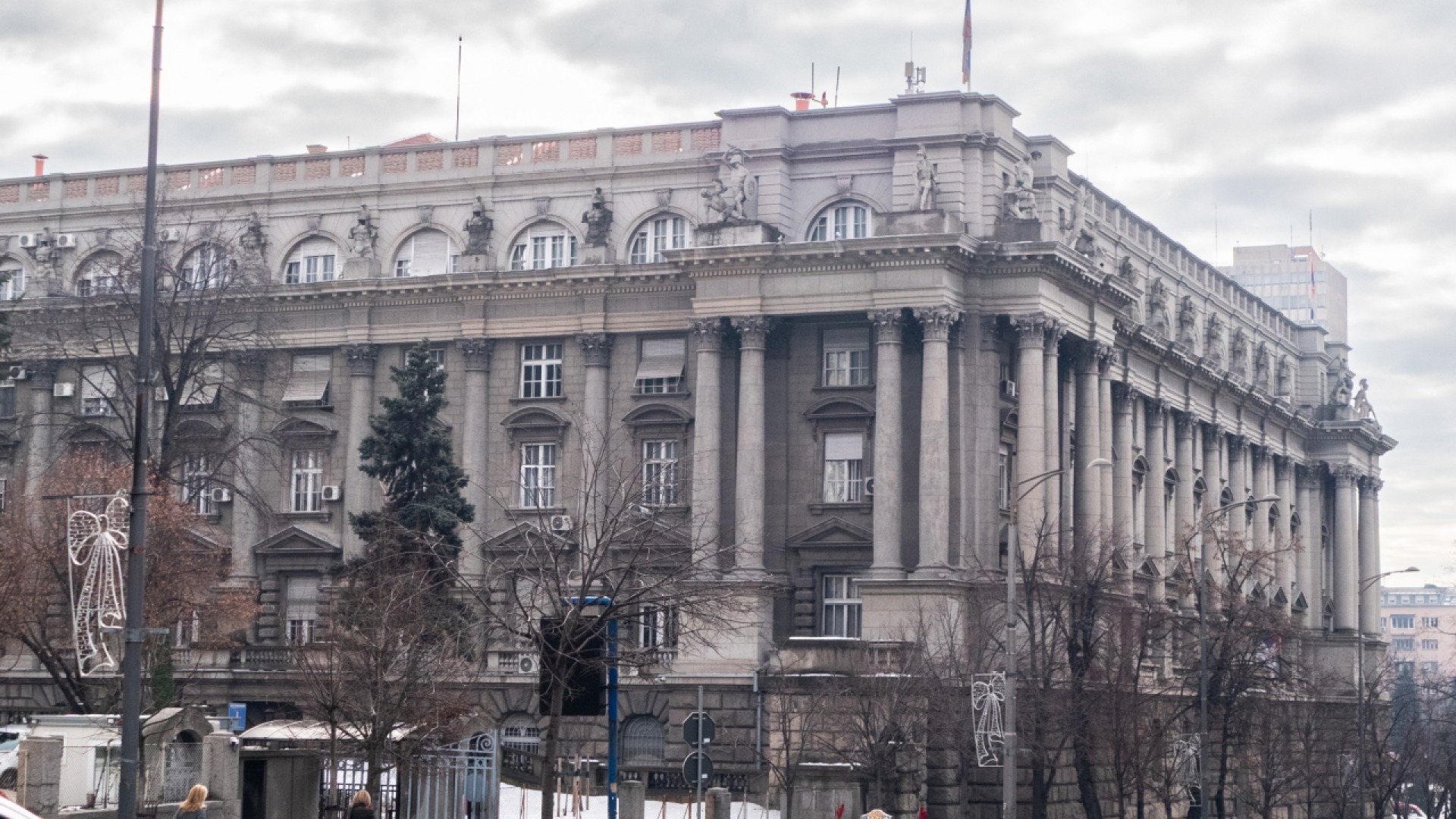
The “Stone Palace,” Baumgarten’s Old General Staff Building
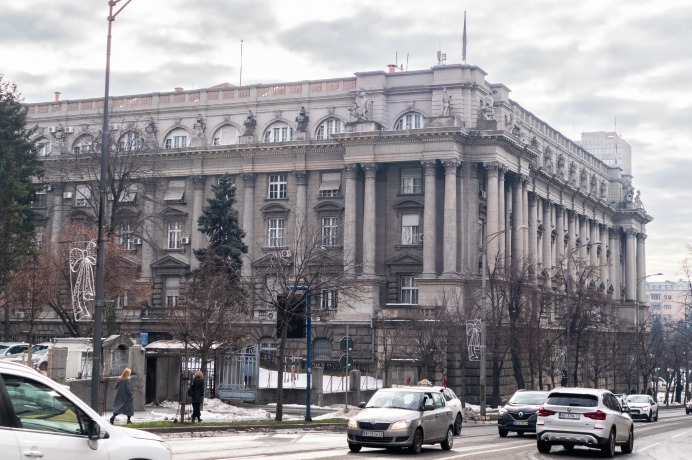
Before you stands the building of the old General Staff, also known as the “Stone Palace” or “Baumgarten Palace.” It was built between 1924 and 1928 according to the design of the émigré architect Vasily Wilhelm Fyodorovich Baumgarten.
ул. Кнеза Милоша, 33, Белград
An important note should be made here. This building is not by Krasnov, but it belongs to the same “semantic fabric.” It is also the work of a Russian émigré architect and one of the key symbols of interwar academicism on Kneza Miloša Street.
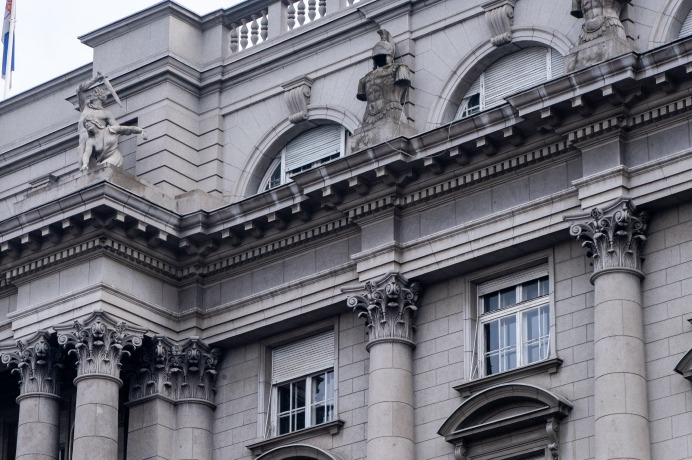
Before you stands the building of the old General Staff, also known as the “Stone Palace” or “Baumgarten Palace.” It was built between 1924 and 1928 according to the design of the émigré architect Vasily Wilhelm Fyodorovich Baumgarten. The building is often described as “exceptionally monumental and decorative,” one of the finest examples of public architecture in interwar Belgrade in the spirit of academicism.
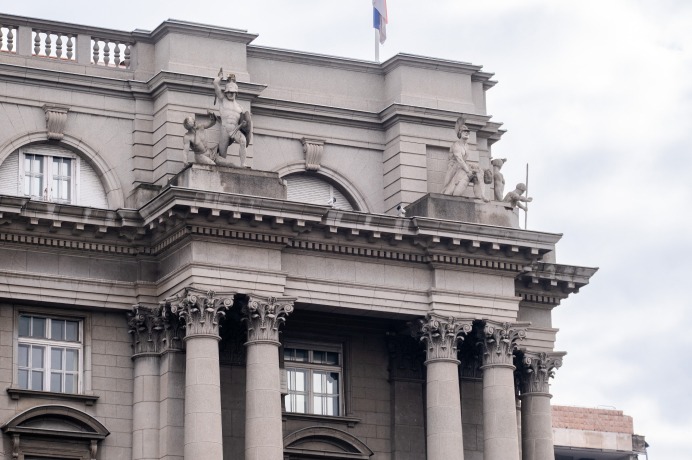
The interior is richly decorated; various materials were used in the treatment of the floors, walls, and ceilings, while the decorative elements refer to Antiquity and the Renaissance. Stylistically, the interior is closest to the Russian Empire style, which dominated in the first half of the nineteenth century. The central staircase at the entrance is flanked by parapets; above them rise pairs of twin columns supporting a coffered ceiling. The coffers are filled with floral rosettes. In the longitudinal corridor, the ceiling is decorated with stucco work and painted with motifs from the Renaissance decorative programme.
And finally, the composition: a monumental entrance to the ceremonial hall, articulated by double columns of roughly hewn stone and a tympanum; above it is the figurative relief Samson and the Lion, created by Vladimir Zagorodnyuk. Samson and the Lion symbolizes strength and struggle — a narrative entirely appropriate for a military space.
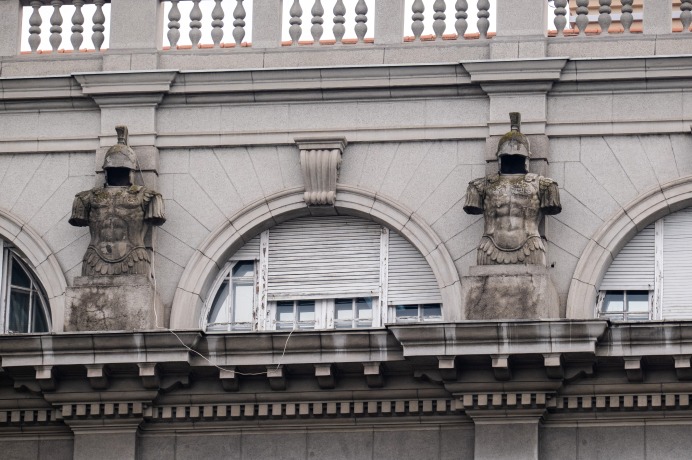
If you want to understand the logic of academicism, “trace the façade vertically with your eyes.” The upper part does not truly exist on its own: it always “grows” out of the lower tier, like a conclusion from a thesis.

Architects
Vasily (Wilhelm) Fyodorovich von Baumgarten
Routes
Ministerial
Address
ул. Кнеза Милоша, 33, Белград