The Church of Saint George on Banovo Brdo
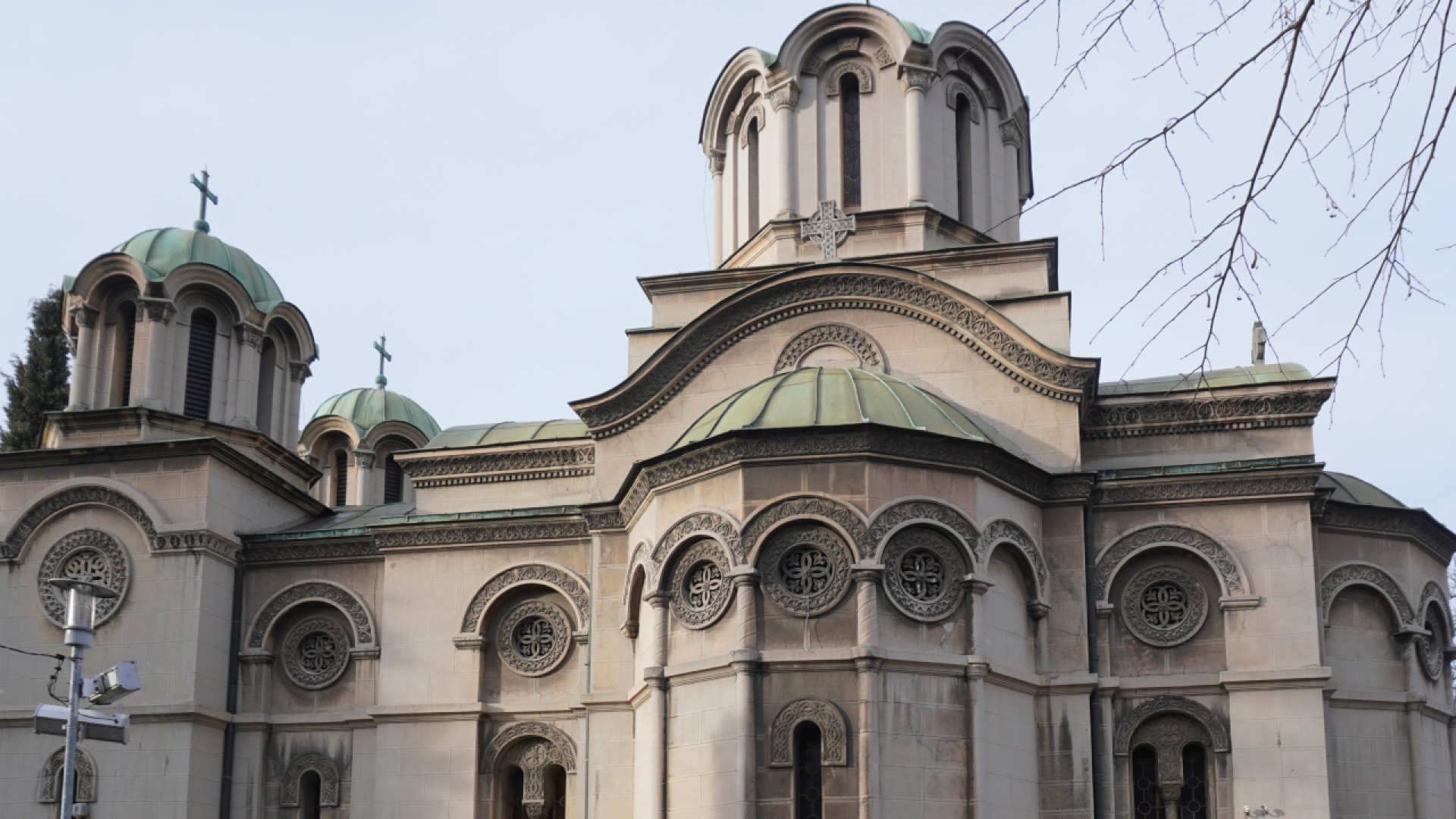
This church carefully brings together family memory, émigré craftsmanship, and Belgrade’s architectural tradition. Its architecture combines a cruciform plan, an expressive apse, a wooden iconostasis, and unique icons.
ул. Кировљева, 1, Белград
The Church of Saint George on Banovo Brdo was built between 1928 and 1932 according to the design of the Russian architect Vasily Androsov. This was a time when Belgrade was growing rapidly, acquiring the character of a capital, and religious architecture was becoming woven into the urban fabric: a church had to serve as a recognizable landmark, but it also had to remain in tune with the “spirit of the age.”
The idea behind the construction of the church was not entirely typical for Belgrade at that time. This was a personal story rather than a “state commission,” so common in that period: in 1925, the Belgrade merchant Mitar Jovanović appealed to Patriarch Dimitrije with a request to build a church in memory of his two children who had died at an early age. He donated the land, asked that the church be dedicated to Saint George — the patron saint of his family — and requested that a family crypt be built beneath it.
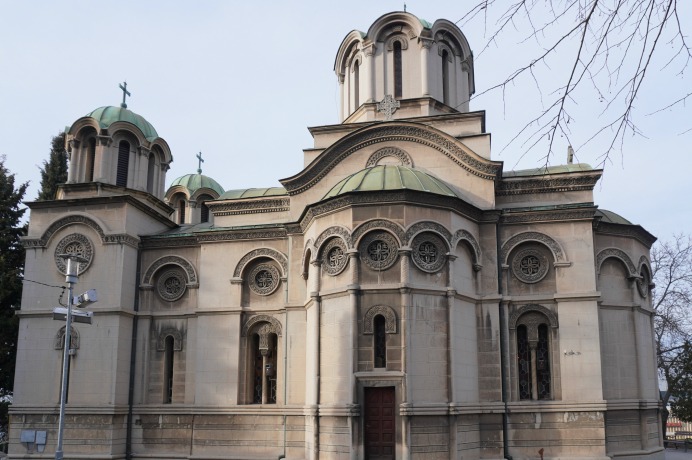
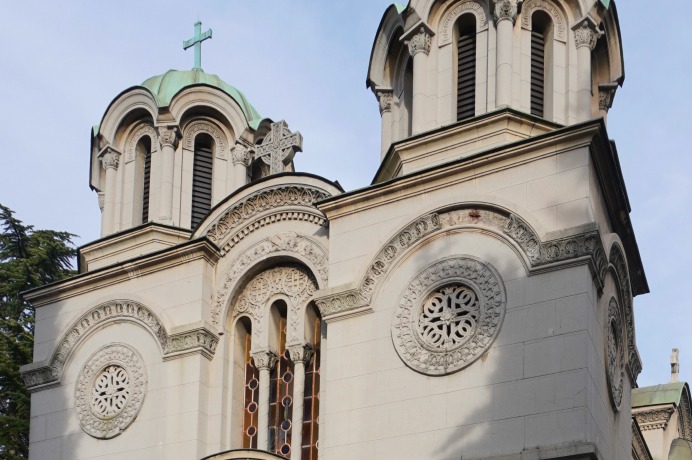
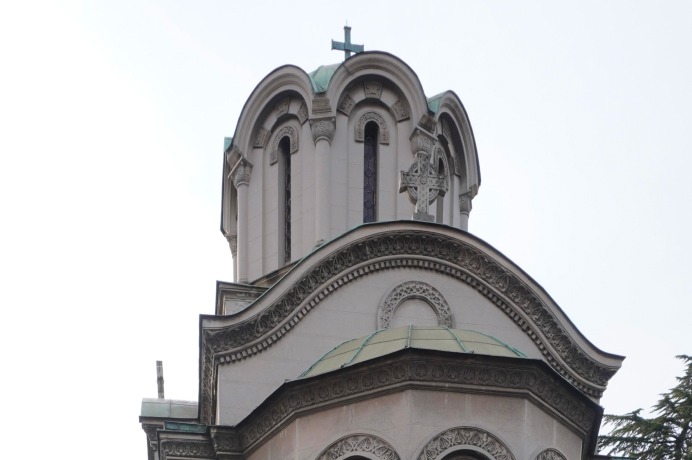
Architecturally, the church is designed as an inscribed cross, a trefoil, in the Neo-Byzantine traditions characteristic of Belgrade’s sacred buildings between the two world wars.
It is worth looking closely at the apse: on the outside it is five-sided, while on the inside it is semicircular. The choir apses on the northern and southern sides open onto the naos, giving the space both acoustic and spatial fullness.
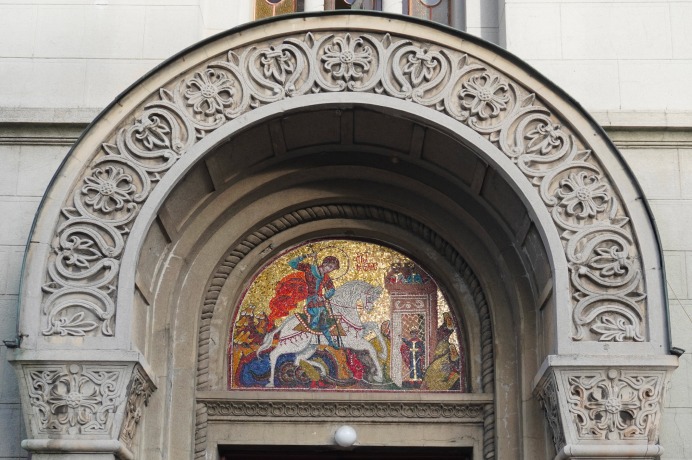
Pay attention also to the main entrance: it is emphasized by columns. Even when the decoration is restrained, the entrance must be marked: a church always constructs a boundary between the secular and the sacred, between what is accessible to human experience and what lies far beyond its limits.
The wooden iconostasis is the work of Nestor Aleksić. There are also large icons, among which the icon of Saint Nicholas stands out — an original work by the Russian artist Kolesnikov. Here, once again, we can see the characteristic mechanism of émigré presence: not to “imitate a style,” but to weave one’s own craftsmanship into the local tradition.
Routes
Holy Connections
Address
ул. Кировљева, 1, Белград